[Interview]: Dennis Burmeister & Sascha Lange, authors of “Behind The Wall” … February 2018 (German)


Interview

Dennis Burmeister & Sascha Lange


Einleitung:
Unser Interview #3. Wer hätte das gedacht. Nach den Monument-Ausgaben (zb. deutsche Ausgabe, englische Version & Extended Limited edition) also nun ein weiteres Buch im Zusammenhang mit Depeche Mode – diesmal mit Fokus auf der Fankultur. Du erwähntest dessen Veröffentlichung ja bereits im letzten Interview.

Details zum Buch “Behind The Wall” gibt es hier


Interview:

Wann und wie genau kam es zu der Idee, ein Buch über die Depeche Mode-Fans in der DDR zu machen?
Dennis Sascha und ich merkten während unserer Arbeit an MONUMENT, dass wir zum Thema Depeche Mode in der DDR, Depeche Mode „behind the iron curtain“ zwar viel Material zusammengetragen hatten, dieses Material aber eher die Geschichte ihrer Fans abbildet. Die Band selbst hat ja physisch kaum bis gar nicht in der DDR stattgefunden. Es gab in MONUMENT ein BEHIND THE WALL-Kapitel, welches diese Geschichte zwar recht sachlich darstellt, allerdings auf Querverweise zur politischen Situation im gesamten Ostblock weitgehend verzichtete. Die Idee zu unserem neuen Buch ist also mindestens schon so alt, wie MONUMENT selbst.

Sascha Die Idee zu dieser Thematik gab es schon vor zehn Jahren. Dennis und ich haben uns bei Recherchen zum Thema „Depeche Mode-Fans in der DDR“ überhaupt erst kennengelernt, zufälligerweise übrigens im Berliner Büro von MUTE RECORDS.


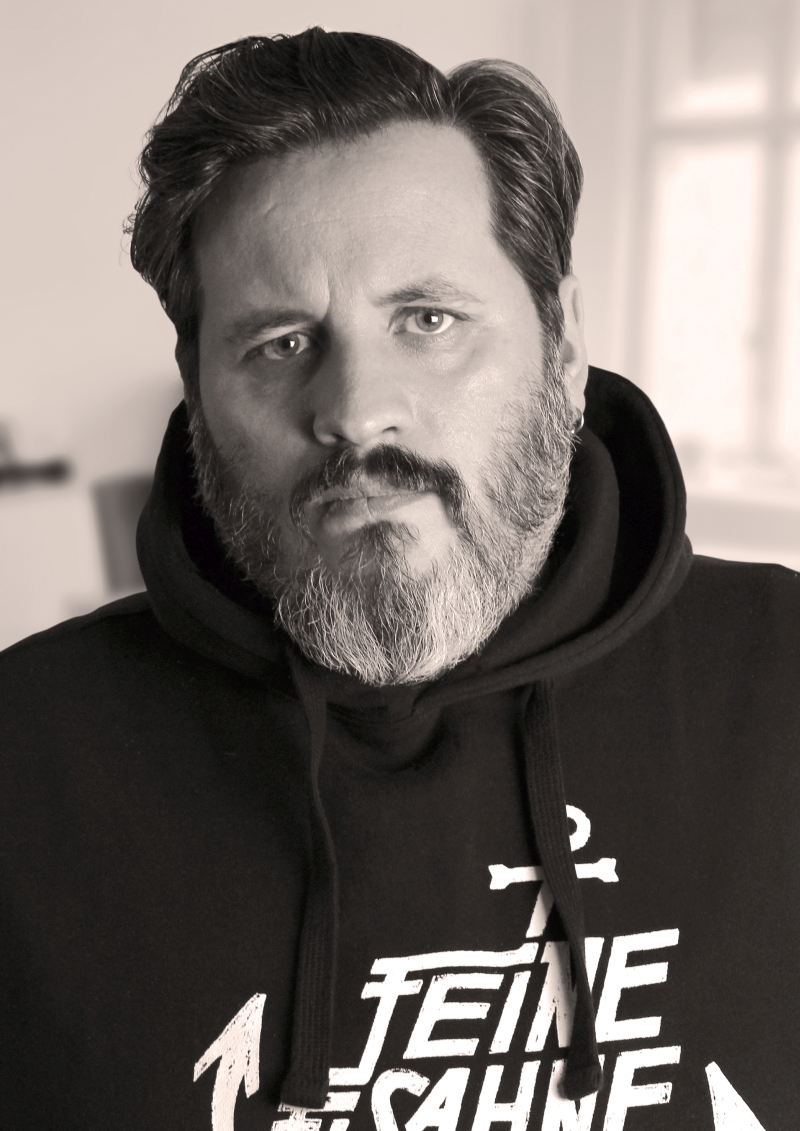
(Promo-Bild Dennis Burmeister)
 
Ihr stammt beide aus der DDR. Wie sah eure Jugend so aus? Wie sah es mit Disko-Besuchen aus? Welche Musik lief und wie haben es die Leute aufgenommen? War der Musikkonsum zu Hause ein anderer?
Dennis Ich bin in Malchin aufgewachsen, einer recht langweiligen aber liebenswerten Kleinstadt mitten im Herzen der Mecklenburgischen Seenplatte. Malchin war keine pulsierende Metropole und wirkte im Gegensatz zu Städten wie Rostock oder Neubrandenburg eher verschlafen. Trotzdem gab es in unserer Stadt einige Tanzschuppen, wo wir uns an den Wochenenden natürlich rumtrieben. Musikalisch gesehen nahm die Stadt eher eine Sonderrolle ein. Wir wuchsen mit der Musik unserer Eltern auf, hörten die alten Platten der Beatles, der Stones, von Neil Young und Bob Dylan oder CCR. Mein Vater war großer Rolling Stones-Fan und ich erinnere mich an lange Gespräche mit ihm in unserer Küche, wo er mir regelmäßig seine Lieblingsinterpreten vorspielte. Mein Vater konnte Stunden damit verbringen, Musik im Radio aufzunehmen. Ich erinnere mich auch noch an ein altes Tonbandgerät und dass er gerissene Tonbänder mit Nagellack zusammenklebte. Mein Vater verbrachte wirklich sehr viel Zeit mit seiner Musik. Und ich tat es ihm irgendwann gleich.

Sascha Ich wuchs in Leipzig auf, in eine – ich würde mal sagen – typische Jugendzeit in den 1980ern, nur eben im Osten. Wir haben internationale Chartmusik gehört, den „La Boum-Die Fete“-Film und „Beat Street“ geschaut, Bravo-Poster getauscht und an den Wochenenden versucht, in die Diskos zu kommen. Und in der zweiten Hälfte der 1980er versuchten die Leute in unserer Clique irgendwie so auszusehen wie Depeche Mode oder The Cure.


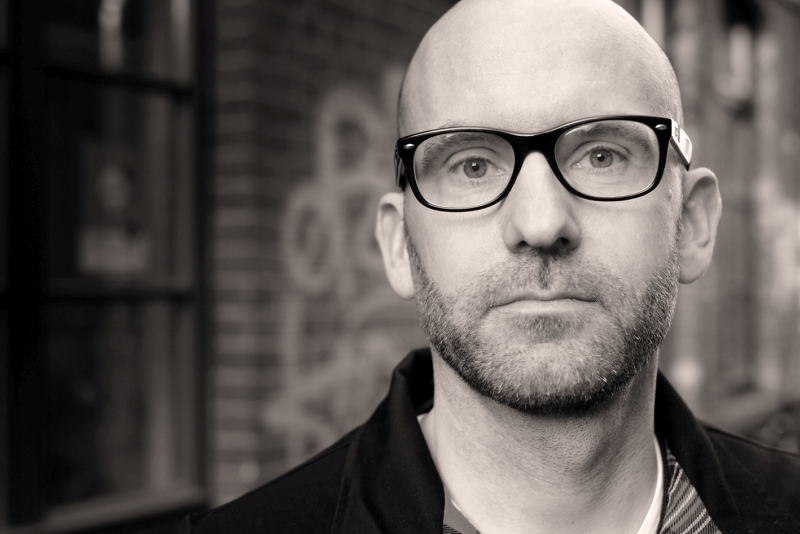
(Promo-Bild Sascha Lange, © schmidtshot.de)
 
Neben der (Schul-)Diskothek war in den 80igern das Radio eine Quelle um Musik zu entdecken. 1986 startete in der DDR, hervorgehend aus dem gleichnamigen Programm, der Jugendradiosender DT64; dort gab es später die Sendung „Electronics“ mit Olaf Zimmermann (mit „Elektrobeats“ moderiert Olaf noch heute auf RadioEins eine ähnlich gelagerte Sendung). Dort präsentierte er u.a. auch den „Depeche Mode-Titel der Woche“. Habt ihr viel Radio gehört? Welche Rolle spielte Olafs Sendung in eurem Umfeld? Wart ihr wie mein Bruder fleißige Aufnehmer der DM-Tracks und anderer Musik, die ihr mochtet?
Dennis Ich gehöre definitv zur „Generation Radio“. Meistens hörte ich DT64, schnitt bei Sendungen wie „Duett – Musik für den Rekorder“ komplette Platten unterschiedlichster Künstler mit. Samstags lief dann kurz nach Mittag erst „electronics“ mit Stefan Lasch und Olaf Zimmermann und im Anschluss daran „Tendenz Hard bis Heavy“ mit dem großartigen instrumentalen Intro The Call Of Ktulu von Metallica aus deren 1984er Meisterwerk „Ride The Lightning“. Eigentlich nahm man damals alles auf, was man musikalisch erstmal bekommen konnte. Den Luxus, auf Musik aus dem kapitalistischen Ausland aus Geschmacksgründen zu verzichten, den hatten wir damals eigentlich nicht. Wer hier das Gegenteil behauptet, der verklärt die Situation. Man hörte tatsächlich, was man bekommen konnte. Klar, man hatte seine Favoriten, hörte gewisse Interpreten besonders gerne oder verstand sich als „Fan“. Aber wie sehr „Fan“ konnte man damals von einer Band schon sein, von der man nur verschwindend geringe Bruchstücke kannte? Bei Depeche Mode war das auf Anhieb anders. Da gab es ab Mitte der 80er einen Hit nach dem anderen. Dem konnte man sich gar nicht verweigern. Entweder man mochte die Band, ihre Musik, den Pop … oder man dachte in Schubladen, legte sich musikalisch fest und verweigerte sich. Ich persönlich fand die 80er großartig. Zu gewissen Songs bin ich sofort wieder auf Zeitreise und erinnere mich an die unmöglichsten Situationen. „Down Under“ von Men At Work, „Let‘s Dance“ von David Bowie, „You‘re the Voice“ von John Farnham bis hin zu „You‘re A Woman“ von Bad Boys Blue. Alles hatte damals irgendwie seine musikalische Berechtigung, lief aber selten in den DDR-Diskotheken. Wir waren also auf das Radio angewiesen.

Sascha Das Radio war damals das wichtigste Unterhaltungs- und Informationsmedium für Jugendliche, besonders im Osten. Meine Eltern hörten auf ihrem kleinen Küchenradio meist den westdeutschen Deutschlandradio-Sender mit fast ausschließlich nur Wortbeiträgen. Musiksender wie RIAS2, Bayern3 oder NDR2 und dann ab 1986 eben auch DT64 waren hingegen viel bunter und boten den passenden Soundtrack für das Teenie-Dasein und waren darüber hinaus auch Infoquelle über die eigenen Lieblingsmusiker, quasi ein Bravo-Magazin zum Anhören. Im Gegensatz zu Dennis waren meine musikalischen Vorlieben von Anfang an auf Popmusik beschränkt, später dann mehr Indie-Musik, quasi alles zwischen Joy Division und Frankie Goes To Hollywood.


(Video zu Depeche Mode’s “Strangelove”)
 
Ein Riesen-Highlight war das Depeche Mode Konzert in der DDR, in der Berliner Werner-Seelenbinder-Halle am 07. März ‘88. Dazu gab es wohl auch eine Pressekonferenz. Wie habt ihr davon mitbekommen? Wart ihr da? Erzählt doch mal deine Erlebnisse im Zusammenhang mit diesem einzigartigen Konzert.
Dennis Dass Depeche Mode im Osten gespielt haben, stand irgendwann mal in der Trommel, der DDR-Zeitschrift für Jungpioniere. Daran erinnere ich mich. Allerdings war ich seinerzeit auch erst zarte 13 Jahre alt. Sascha war aber damals in Berlin dabei und seine Geschichte klingt, wie so viele andere Erzählungen rund um das Konzert, recht abenteuerlich. In unserem neuen Buch gibt es ein ausführliches Kapitel zum einzigen Depeche Mode-Konzert in der Berliner Werner-Seelenbinder-Halle.

Sascha Die Gerüchte kursierten etwa eine Woche vorher auch in Leipzig und ich mit meinen 16 Jahren wollte unbedingt dorthin. Glücklicherweise hatte ich Freunde in Ostberlin, die mir ein Ticket auf dem Schwarzmarkt besorgt hatten und meine Eltern ließen mich wirklich am Montag, den 7. März die Schule schwänzen und zum Konzert fahren. Das Konzert selbst war eines der prägendsten Erlebnisse in meinem Leben: Die West-Lieblingsband, die man nur von Postern und verrauschten Aufnahmen kannte, endlich mal live zu sehen und genau in der Zeit, wo man selbst ein Riesen-Fan war – unbeschreiblich…


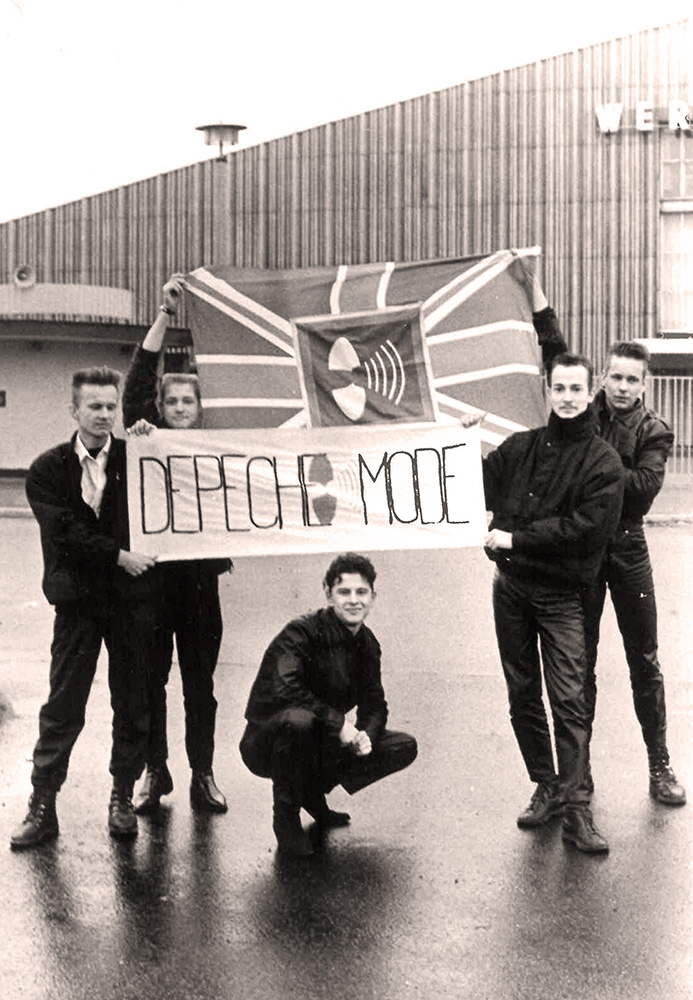
(Depeche Mode Fans vor der Werner-Seelenbinder-Halle)
 
Es gab sicherlich wie bei Jugendlichen üblich Cliquenbildungen. In welchen wart ihr so unterwegs? Nach welchen Kriterien fand man sich zusammen – welche Rolle spielte die Musik dabei?
Dennis Ich war in der „Bushausclique“, die damals (natürlich) angesagteste Clique in der Stadt. Man traf sich nach der Schule in einer alten Bushaltestelle aus Wellblech und hing dort stundenlang ab. Wir machten es uns dort richtig gemütlich, stellten abends Kerzen auf, hörten Musik und spielten stundenlang Karten. Der eine oder andere Jugendliche schlief dort an den Wochenenden auch seinen Rausch aus. Irgendwann strichen wir das Bushaus blau/weiß an, die Farben unseres Fußballvereins Hansa Rostock, von welchem wir alle Fans waren. Musikalisch lief dort meistens Hard Rock oder Heavy Metal. Es gab aber auch viele „Blueser“ in der Clique, die Neil Young, Bob Dylan oder Janis Joplin hörten und sich als Teil der Friedensbewegung verstanden. Die meisten Fans in der Stadt hatte wahrscheinlich Udo Lindenberg. Ich kannte damals eigentlich kaum jemanden in der Stadt, der nicht auch Udo-Fan war.

Sascha Meine Jugendclique entstand 1987 aus zwei Freundeskreisen in der Leipziger Südvorstadt und wir trafen uns täglich auf dem Steinplatz. Wir waren etwa ein Dutzend Mädchen und Jungs, die alle versuchten New Waver zu sein, also trugen wir schwarze Klamotten und hatten entsprechende Frisuren. Der obligatorische Kassettenrecorder auf der Parkbank spielte neben Depeche Mode, The Cure und den Ärzten vor allem Anne Clark oder Tears For Fears; später auch Die Toten Hosen, weil einige von uns dann lieber Punks sein wollten. An den Wochenenden waren wir meist bei einem von uns zu Hause und feierten Partys.


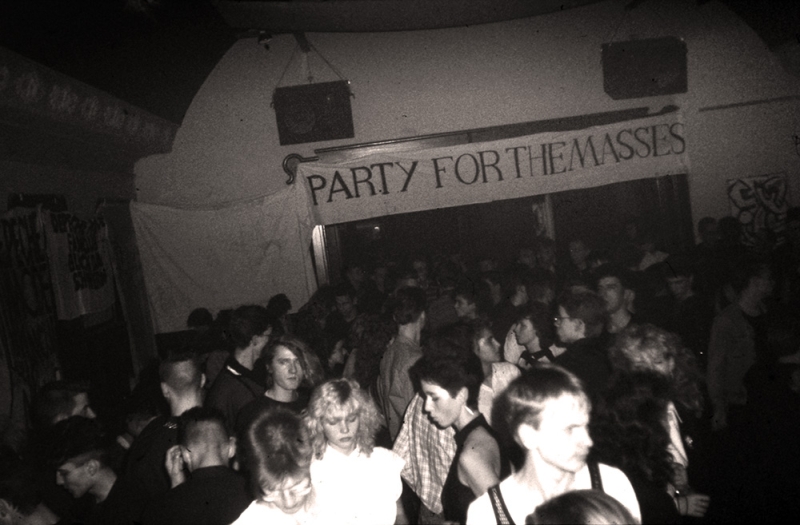
(Depeche Mode Fans Annaberg 1989)
 
1988 war das Konzert und anderthalb Jahre später fiel die Mauer und die Wende wurde eingeleitet. Wie war das für euch persönlich? Welchen Eindruck, denkt ihr, hatten diese Umwälzungen allgemein auf DM-Fans in der DDR? Jetzt gab es schließlich die Möglichkeit alle geliebten Alben im Original zu kaufen. Ging man als erstes in den nächstgelegenen City Music-, WOM- oder wie auch immer genannten Laden? Gab man die 100 DM Begrüßungsgeld für Depeche Mode aus?
Dennis Ich kann mich noch gut an die unmittelbare Vorwendezeit erinnern. Es war sehr emotional, weil man plötzlich nicht mehr wusste wo man hingehörte, wo man hinwollte, bzw. wo man politisch stand. Die Menschen trauten sich plötzlich, Missstände in der DDR offen anzusprechen. Es gab einige Freunde, die mit ihren Familien plötzlich in den Westen zogen oder die Chance zur Flucht über Ungarn nutzten. Nach meinem damaligen Empfinden überschlugen sich die Ereignisse regelrecht. Man ging morgens normal zur Schule, während das Land langsam zerbrach. Das war für uns junge Heranwachsende alles gar nicht wirklich zu verstehen. Mein erster Depeche Mode-Tonträger nach dem Mauerfall war die Single „See You“ auf MCD. Und dieser Moment war schon irre. Dieser Sound, diese Stille im Hintergrund, kein quälendes Rauschen einer totgedudelten Kassette mehr. Für mich war das Science Fiction pur, ein kosmischer Hörgenuss. In Meckpomm waren wir natürlich sehr limitiert, was gut sortierte Plattenläden betraf. In Neubrandenburg gab es den „Cadillac“ und der war eigentlich recht gut sortiert mit Depeche Mode, aber auch den anderen Bands, die dann plötzlich relevant wurden.

Sascha Da ich ein paar Jahre älter als Dennis bin, habe ich die Wendezeit in der Clique noch etwas intensiver erlebt, auch die Vorgeschichte. Ich erinnere mich an einige politische Diskussionen innerhalb der Clique, wobei wir unser Wissen und unsere Argumente natürlich größtenteils von unseren Eltern aufgeschnappt hatten. Einige aus der Clique nahmen im Laufe des Jahre 1989 schon an illegalen Demos in Leipzig teil und in der Clique sind wir ab September dann auch immer auf die Montagsdemos gegangen. Und ich erinnere mich noch gut an den Gewissenskonflikt der über 18jährigen in unserer Clique: Abhauen über Ungarn oder bleiben? Die meisten von uns waren damals allerdings noch in der 10. Klasse oder in der Lehre, wir waren noch behüteter und machten uns noch keine Gedanken, wie es im Leben mal weitergehen sollte. Aber die, die ihren Facharbeiterabschluss in der Tasche hatten, waren da risikofreudiger. Nach dem Mauerfall sind wir Ende November für ein Wochenende nach Westberlin gefahren und ich hab mir von meinem Begrüßungsgeld tatsächlich eine Depeche Mode-Platte auf einem Flohmarkt gekauft. Es war das legendäre Bridgehouse-Bootleg.

 
Nun war die Mauer weg. Depeche Mode Fans aus dem Osten trafen auf Fans aus dem Westen? Waren da Unterschiede zu spüren? War es eher ein „Geil wir können endlich gemeinsam Dave Dancing machen“ oder stand man sich skeptisch auf den Mode-Partys gegenüber?
Dennis Wir fuhren 1992 erstmals nach Hamburg zur „Masses“. Davor feierten wir unsere Band(s) immer in Neubrandenburg, wo der damalige FC Rosebowl 88 zahlreiche legendäre Events veranstaltete. Fernweh kannte ich gar nicht. Hin- und wieder sind wir mal nach Berlin oder Hamburg gefahren, aber dann eher wegen der Konzerte, die im Rahmen der jeweiligen Partys stattfanden. Die meisten Partys feierten wir aber bei uns in der Heimat. Bei uns gab es Gott sei Dank keine Davedancing-Contests. (Hahaha)

Sascha Mit dem Ende der DDR habe ich auch erstmal Depeche Mode hinter mir gelassen und mich mit all den wenig bekannten Indie-Bands beschäftigt, die man in der DDR zuvor nicht kannte, weil sie nicht im Radio gespielt wurden. Das heißt, nun wurden sie gespielt und zwar bei DT64 in der Sonntagspätvorstellung von und mit Ronald Galenza. Da lernte ich dann Bands wie My Bloody Valentine, Slowdive oder Blumfeld und andere kennen und lieben.

 
1990 erschien mit „Violator“ ein Album, welches diese bewegende Zeit begleitete. Erstmalig erlebten die in der DDR aufgewachsenen den Veröffentlichungsprozess (Singles, Album, Tour). Es ist das beliebteste Album in der Fangemeinde. Wie habt ihr die Veröffentlichung erlebt? Welche Bedeutung hatte das Werk für euch? Zu „Violator“ gab es auch die erste Tour, die Fans aus beiden Teilen Deutschlands besuchen konnten. Zwei der Konzerte fanden in Berlin statt, welche quasi den Osten mit abdeckten. Seid ihr zu den Konzerten gegangen? Wie fühlte sich das an? Erzählt doch mal wie ihr es erlebt habt. Was war anders im Vergleich zum Konzert ‘88?
Dennis Die erste Berührung mit „Violator“ hatten wir damals, wenn ich mich recht erinnere, durch den Auftritt der Band bei Peters Pop Show im November 1989. Die Sendung wurde im Dezember ausgestrahlt und wir saßen bis spät in die Nacht vor der Glotze. Depeche Mode spielten neben „Personal Jesus“, der ersten Auskopplung von „Violator“ auch die spätere Erfolgssingle „Enjoy the Silence“. Ob es tatsächlich das beliebteste Album der Band ist, kann ich nicht sagen, aber es hatte schon einen unglaublichen Einfluss auf die Fans. Mein erstes Depeche Mode-Konzert fand allerdings erst 1993 statt. 1990 war ich verschüchterte 15 Jahre alt, Schüler, ohne Einkommen und fahrbaren Untersatz. Tatsächlich ärgere ich mich natürlich, damals nicht dabei gewesen zu sein. Aber es gibt ja zahlreiche gute Bootlegs der Tour. Es war die letzte rein elektronische Depeche Mode-Tour ohne Schlagzeug. Allein diesen Umstand hätte ich live gerne erlebt. Das Album selbst markiert vielleicht den künstlerischen Höhepunkt der Band, in die ich mich irgendwann mal verliebt habe. Danach veröffentlichte die Band nur noch reine Konzeptalben, die sich inhaltlich beinahe zwangsweise vom Vorgängeralbum unterscheiden mussten. Ich habe damals viele Entscheidungen der Band nicht verstanden, am wenigsten im Veröffentlichungsjahr der „Songs of Faith and Devotion“. Aber gut, man gewöhnte sich letztendlich an die vielen Stilwechselversuche und an die immer neuen Gesichter im Bandumfeld.
 

(Video zu Depeche Mode’s “World In My Eyes”, mit Bildern der Violator-Tour)
 
Viele Fans von damals sind der Band treu geblieben. In der Fangemeinde wachsen inzwischen deren Kinder hinein. Trifft dies auch speziell auf Fans aus dem Osten zu? Habt ihr ein Stimmungsbild bei den Arbeiten zum Buch aufnehmen können? Wie empfinden sie aktuelle Veröffentlichungen? Gehen sie noch gern und euphorisch zu den Konzerten?
Dennis Also die meisten Fans von damals sind der Band schon treu geblieben und fahren auch immer noch gern zu den Konzerten. Ich selbst gehöre ja auch zu den ständigen Nörglern, die früher alles besser fanden und Alan Wilder schmerzlich vermissen. Ich denke, das gehört einfach zu dieser speziellen Liebesbeziehung mit Depeche Mode dazu. Die Band ist zudem eine völlig andere, als noch vor einigen Jahren. Wenn man sich die riesigen Stadien anschaut, welche die Band heutzutage füllt, dann macht einen das manchmal schon sprachlos. Dort treffen mittlerweile drei Generationen von Fans aufeinander. Ich bin da auch weitaus weniger euphorisch als andere Fans, die spezielle Fanaktionen planen und bunte Luftballons im Stadion steigen lassen. Meine Euphorie hält sich in Grenzen, denn mein Interesse gilt ausschließlich dem Konzert. Und Depeche Mode-Konzerte sind mittlerweile große perfekte Inszenierungen, bei denen leider nichts unvorhergesehenes mehr passiert.

Sascha Ich habe den Eindruck gewonnen, dass Depeche Mode-Konzerte für die Ü40-Generation, zu der ja auch ich zähle, zunehmend die Funktion eines Jungbrunnens haben. Wenn Martin 2018 „A Question Of Lust“ singt, befinden sich in Gedanken alle wieder in der Situation 30 Jahre zuvor, wo sie als Teens zur Schmusesongrunde genau diesen Song schon mal gefeiert haben und das tut einfach gut. Ich glaube auch, dass deswegen die Leute pro Tour so viele Konzerte besuchen. Und wegen des Gemeinschaftsgefühls. Depeche Mode ist ja eine Nischenband, aber, wie Anne Haffmans schon mal sagte, diese Nische ist unglaublich groß. Und es ist natürlich toll, überall auf der Welt Gleichgesinnte zu treffen, Fans der Band. Man hat sofort einen Draht zueinander.


(Live-Video zu Depeche Mode’s “Enjoy The Silence” während der “Delta Machine” Tour)
 
Apropros älter werden. Dennis, zu deinen Anfangszeiten hast du sicherlich Kassetten und die ein oder andere Vinyl zu Hause gehabt. Heute wird vieles fast nur digital als Download oder Stream verkauft. Depeche Mode veröffentlichen bisher einen Großteil immer noch auf den klassischen Medien CD und Vinyl. Einige der wenigen die sich das noch leisten. Wie empfindest du den Wandel des Tonträgermediums von Tape > Vinyl > CD > mp3 > Stream?
Dennis Ich bin in Bezug auf den Niedergang der Musik durch die mp3-Industrie nicht mehr so skeptisch, wie noch vor einigen Jahren. Als Plattensammler erlebt man ja einen regelrechten Boom, denn Vinyl ist schon lange kein Nischenprodukt mehr. Als Fan von guter Musik werde ich also nach wie vor von den Plattenfirmen und Künstlern verwöhnt. Vor einigen Tagen habe ich zahlreiche mp3 von meinem Rechner gelöscht und angefangen, meine Platten und CDs zu digitalisieren. Ich kann diesen komprimierten Datenmüll einfach nicht mehr hören. Was eigentlich absurd ist, denn zu Beginn des Interviews habe ich dir noch erzählt, dass unser Fansein Mitte der 80er mit verrauschten Tapes begann. Ich habe für mich einfach beschlossen, dass ich mir für Musik wieder mehr Zeit nehmen möchte. Diesen ganzen gesammelten Datenmüll hört man sich nie wieder an. Hat man die Platte im Regal, dann greift man da schon eher mal wieder hin.
 
Und da haben wir doch glatt schon überzogen aber eine Frage bleibt: was kommt als nächstes bei euch beiden? Dennis, wirst du jetzt Bürgermeister in deinem Wohnort?
Dennis Hilfe, nein. Für solch einen Posten fehlt mir das diplomatische Geschick. (Hahaha)… Es wird auf jeden Fall ein drittes Buch zu Depeche Mode geben. Das Konzept steht und wir haben – wie bereits bei den beiden Vorgängern – zahlreiche Musen und Mentoren, die uns bei unserer Arbeit unterstützen. (Grins) Ich freue mich jedenfalls, dass wir mit MONUMENT und auch BEHIND THE WALL offenbar einen Nerv getroffen haben, denn die Resonanz ist nach wie vor überwältigend. Mir war und ist der Rummel um meine Person zwar immer noch ein bisschen viel, aber ich habe mit Sascha jemanden an meiner Seite, mit dem die Arbeitsteilung hervorragend funktioniert und der auch gerne in der Öffentlichkeit steht. Dafür kann ich ihm eigentlich gar nicht genug danken.

Sascha Das Arbeiten funktioniert zwischen Dennis und mir ja auch so gut, weil wir eine ähnlich kritische Einstellung zur Band haben und ihr dennoch wohlgesonnen sind, eben weil sie uns irgendwie schon das halbe Leben lang begleitet und man sich ihr irgendwie nicht entziehen kann. BEHIND THE WALL war 2008 ja ursprünglich als Dokfilm geplant, der aber aus verschiedenen Gründen damals nicht zustande kam. Einer der Gründe, warum es nun als Buch erschienen ist, ist schlicht und ergreifend, weil Dennis und ich uns so gut verstehen und wir nach MONUMENT unbedingt wieder was zusammen machen wollten, da wir uns entfernungsbedingt sonst viel zu selten sehen. Unsere Buchprojekte haben also auch eine ganz simple soziale Komponente, eben weil wir keine Geschäftspartner sondern Freunde sind. Deswegen ist es fast schon schade, dass die Arbeit am Buch vorbei ist und Dennis leider nicht mit auf die gesamte Lesetour kommen kann. Allein deswegen werden wir uns schon Gedanken über Folgeprojekte machen… Ich als Historiker mag darüber hinaus, dass man anhand der Bandgeschichte von Depeche Mode und der Geschichte ihrer Fans, viel über die Mechanismen von Pop- und Jugendkultur in den 1980ern erklären kann – auf beiden Seiten der Mauer.


Websites:
Depeche Mode
Depeche Mode @ Facebook
Depeche Mode Monument
Sascha Lange
Ventil Verlag


[Music & Interview]: Schlammpeitziger


Music & Interview
Schlammpeitziger


Introduction:
Schlammpeitziger is the moniker of the German electronic artist Jo Zimmermann who lives in Cologne. His early reputation was built on his inventive use of cheap Casio synthesizers. The name is inspired by the amphibious fish Schlammpeitzger.


Interview:

Hi, Jo.

Thanks for this interview and nice mix of own productions. I discovered your music via a mix of Electronica tracks by Martin Gore (Depeche Mode) in 2001. The mix contained a lot of stuff I started to follow then but your track was one that got my bigger attention. So let‘s start with the first questions. What music did you listen to in your youth? When did you start with producing? Who inspired you? Did you have any other music projects you started before Schlammpeitziger?

Hi Jürgen. You’re welcome!

In the 70ties I was a big KISS fan (I´m born 1964). And in the early 80ties i changed to Wave,Disco and Electronic. Very important for me in this time were Bands like Residents, Telex, Bene Gesserit, Chris&Cosey, Der Plan, Andreas Dorau etc..

In 1986 I bought my Casio CZ 230 S. But really making tracks was around 1989. There was one projekt before Schlammpeitziger it was called Hal´s Dream. It was with a drummer, a guy with sampler and synth and me. We had 2-3 concerts here in Cologne and we split in ’91. They wanted me to learn notes.

And this was not my idea of making music. So Schlammpeitziger was born.

 
Schlammpeitziger 1
(Schlammpeitziger playing at a live gig)
 
Your releases were on small labels like Entenpfuhl, A-Musik, Pingipung, Sonig. How did you get in touch with these labels? Did you produce stuff after signing a deal or did you select the finished tracks for them from your drive? How did you select them? Why did you choose cassette and vinyl only for your first 2 releases?
I met Frank Dommert / Entenphuhl / Sonig in a pub. I was DJ there,and he liked the music I was playing.

He and some friends of him had a band that was called Kontakta. There was Georg Odijk (Founder of A-Music), Markus Schmickler (a musician), Carsten Schulz (musician), Monika Westphal (musician) and Hans Jürgen Schunk (musician) and Frank Dommert. They worked with Contact Micro Prepared Instruments like tables, windows etc.

And we all became friends. After listening to my tracks Frank made my first Release Erdrauchharnschleck on tape in 1993. There was no offical deal, no contract. Me and Frank selected the tracks from the tape. It was an easy yes or no system. Cassette was a easy option to bring out music. So we took this.

The second release Burgfensterrytmuskuckloch was a split LP with Masters Cosmic Music. And they had money for Vinyl. So they made it. And I was very lucky about it! My first vinyl. It was on the label Gefriem run by Jan Werner (Mouse on Mars), F.X.Randomiz and Joseph Suchy (another musician).


Schlammpeitziger 2
(Schlammpeitziger Promo Pic 1 2018)

Talking about your tracks…. How do you start a production of a new song? Where do you find the inspiration for them? Many tracks sound quite funny to me – with a funny melody or feeling.
I just start with a bassline or a melodyloop or a beat. And then collecting more and more loops, sounds and melodys. This gives me the inspiration in which direction it should go.

After this I start with the arrangement. And normally a track is finished after 2-4 weeks.

For me the tracks are not funny,i would say in a good or simple mood. But there is also a lot of melancholy in it. My tracks mostly did not get in people by hearing it just 1 time. If you want to find more listen again. I don´t pack them in a aggressive costume so people maybe find it funny. And it´s a lot of work! And that´s not funny.


(Video “Zwischenzischbericht”, 2000)
 
Your tracks & records have also funny names. How do you create them? Have they any deeper meaning at least for you? Do you have them all in mind – so you know what track it is when someone name it?
The titles, yes. Some are word constructions and some are direct in my mind.

The new record “Damenbartblick auf Pregnant Hill” is this view on that hill. This music was played while they looked at this hill. In my mind for sure!

Often I listen to finished tracks again and again and then I find things inside that bring me to the title/meaning of the track.

I think a can remember a lot of tracks but not all. That’s the problem when you have to much children!

 
Schlammpeitziger 3
(Live picture of Schlammpeitziger)
 
Like mentioned above I discovered your music via a Martin Gore mix that was broadcast on Viva (a German music television at that time) which was also used for the Exciter tour. Did you know about the mix before it was on TV or played at the concerts? What do you think about the mix? Did it create some extra attention for your releases so the sales grew?

I know there was a mix, but i can´t remember what was inside. That´s nearly 17 years ago. And my brain has not get better.

No I didn´t know something about it before Daniel Miller send it to me. No there was no extra attention or sales grew. Only god knows why.

 
The mix made by Martin was not the only connection to Depeche Mode. You also made a remix for their single “Freelove” in 2001. How did you get this job? Many electronic artists are fans of DM, inspired by them or at least respect the output. What about you, are you a fan? What‘s your DM favourite production and why?
Daniel Miller just asked me. And so I did it. And it was paided very good.

And “Freelove” is a nice song.

Do you know Boyd Rice and Daniel Miller – “Cleaness and Order”? This track was a fantastic reason to do it! This track was very important to me! So it also was a thank you Daniel Miller for this song. No I’m not a DM fan. But they have my respect. They are still there!


(DM remix and the track “Mango Und Papaja Auf Tobago” used in our special “Depeche Mode & Their Remixers (Part I)”)
 
Back to your own stuff: you have a strong relationship to A-Musik, a record store in Cologne, a concert venue, a mailorder, a label. Could you please tell us something about this relationship? When and how it started etc…
Look Question 2 and: We are still friends. Sometimes I’m in the A-Musik shop or we meet at friends or concerts. It’s family.
 
Schlammpeitziger 4
(Schlammpeitziger Promo Pic 3 2018)
 
For me your sound is part of what I have in mind about electronic music from Cologne. What do you think? What defines the Sound Of Cologne? What differences are there compared to the music scene in Berlin etc.
I have no idea. I really don’t think about this. It is what it is!
 
For your live shows you work with an visual artist Ulrike Göken. Please tell us something about this. How do you develop the ideas,how do you make the films? Any plans to upload the stuff to youtube or other platforms?
Me and Ulrike are doing the videos since 2003. Right now we are developing ideas and cut videos for the new record. Means: 8 tracks – 8 videos. Later on we put some on youtube.

So over the years and between the records we collecting material we filmed. We film everything that is interesting for us – normal weired stuff. Or we ask other people if they want to make something.

Like for the track Damenbartblick, KotaUska from Ukraine gave us their great photos and we made a video out of it. We were friends on Facebook and we liked their photos so much so we asked and they said yes.

Great collaboration.


(Video “Damenbartblick”, 2017)
 
Wow already the last part of our small interview. You are just about to release your new album “Damenbartblick auf Pregnant Hill” on Bureau B, a label that released stuff by Andreas Dorau, DAF, Kreidler, Krautrock veterans etc. How did you produce this album? Why will it be on Bureau and not some of the labels you worked with in the past? And special story you connect with the album already? And what‘s coming next?
Was not so small at all. Like always at my “Auf dem Brett Studio” I work with computer, ipad and a Alesis Synth.

At the beginning it was very diffcult for me to make a next record after “What´s Fruit?”. This record was standing in front of me like a wall. And i had no idea what’s behind it!

So there was some month in a very bad mood, frustration and personal bad things.

I can hear this in tracks like “What i got”, “Angerrestbay” or “Smooth Motion Kaukraut”. These are very dark or sad tracks for me. But better times came back! So “Ekirlu Kongo” or “Bock Bounceburg” are good examples for this change. And finally I mixed the record with my old friend Mucki.

He has a great studio in Bergisch-Gladbach near Cologne – Mohr Music. That was also very important for my music! He understands my music very good.

Then the record was ready but my label before Pingipung didn’t like it. So i was there without a label after 24 years. That was very frustating. But Jan Werner (Mouse On Mars) had the idea to ask Bureau b. So I have sent the tracks and they liked it.

And suddenly I had a new and very good label! Very nice people are working there! The collaboration is very good!

And I’m on a label with my heroes like “Der Plan” or “Andreas Dorau”. Great!

Special album story: look above.

I hope a lot of concerts will follow now! And there will be 2 unreleased tracks on a split maxi next year.

 
Jo, Thanks for this nice interview & the beautiful mix 🙂
 

Recommendations:
album “Damenbartblick Auf Pregnant Hill” on Bureau B
album “What’s Fruit?” on Pingipung Records
album “Vorausschauende Bebauung” on Sonig


Exclusive Mix:


Tracklist of Exclusive Mix:
01. Schlammpeitziger – Keine Sitar
02. Schlammpeitziger – Mango und Papaja auf Tobago
03. Schlammpeitziger – Honkytonk Schlickummpittz
04. Schlammpeitziger – Verhörspielquäkerseat
05. Schlammpeitziger – Prä-Digitaler Volksstuhlhänger
06. Schlammpeitziger – Frag nicht nach Nord-Süd-Fahrt
07. Schlammpeitziger – Bassbestie´s Blässe
08. Schlammpeitziger – Verkleinerte Vergrößerung
09. Schlammpeitziger – Hagelslaag Süchteln
10. Schlammpeitziger – Schneid ein Stück aus der Zeit
11. Schlammpeitziger – Damenbartblick
12. Schlammpeitziger – What I Got


Websites:
Schlammpeitziger


[Music & Interview]: Mark Reeder


Music & Interview

Mark Reeder


Introduction:

Mark Reeder: representative of Joy Division’s label Factory in the 70ies; manager, producer through the decades; founder of MFS Records in the 90s … We already interviewed him years ago. Read here.
 

Interview:

Hi, Mark.

Nice to have you for another interview on NovaFuture Blog.

Actually this interview was planned a long time ago … with a different topic, the release of Die Vision’s Album “torture”. Unfortunately this project was stopped and the planned album is still unreleased. In the meantime you have made some very cool remixes for New Order and released the nice electronic pop album “Mauerstadt”. So we updated our questions a little bit but kept some of them. Let’s talk about the movie “B-Movie”, your album “Mauerstadt” and check out how it was working on the Die Vision album during the fall of the iron curtain.

In last interview you said that you became the representative of Factory Records, the label that signed Joy Division, in Germany because you already lived in Berlin. This story and many other funny anecdotes are portraited in “B-Movie”. The movie became very successful – a lot of international screenings etc. It also has a very good soundtrack incl Westbam feat “You Need The Drugs” and your track “Mauerstadt”. How much of the stuff of “B-Movie” is true and how much … the phantasy of the film maker? What was your part during the movie production? Was you involved in the track selection for the soundtrack album? What is the idea behind the track “Mauerstadt”?

Actually, it is all true. It’s just that we had to find parts of my story to which we had film footage for. The film is only about my time spent in West-Berlin, because West-Berlin is forgotten. Virtually everything I experienced in East Berlin had to be left out, all except the Toten Hosen gigs. Mainly, this was because we had no film footage from my escapades in the East. Some parts were changed slightly, or adapted to fit the flow of the narrative, as we had to compress 10 years into 90 minutes, so we couldn’t go into deeper detail, such as Nick Caves initial reaction to my flat, which was a 22 sq meter hinterhaus hovel in Kreuzberg, with a coal oven heater, no hot water, no shower and an outside toilet. Nick said it was like living in the Victorian age.

One huge part of my life which also had to be omitted, was going every weekend to the Metropol Theatre on Nollendorfplatz, in the 80s it was Europe’s biggest gay disco. The Berlin birthplace of HiNrg. No one filmed there, ever, so we couldn’t include it in my story, as we had no footage and so we had to make do with Westbam to represent the flourishing dance scene (who was also one of the Metropol DJs).

The selection and running order of the B-Movie soundtrack album was made by Edel and Klaus Maeck. I had absolutely nothing to do with that, I was only asked at the last minute to make a mix of all the tracks which didn’t fit onto CD1. I really wanted to have one of the Neubauten reworks I made on the album, but they wouldn’t license them to us. I also wanted Edel to make it possible for the viewer of the film to be able to access the featured songs in their entirety on the blu ray DVD through seamless branching, this would have enabled the viewer to hear the entire restored soundtrack and also everything in 5.1 surround. After all, I mixed everything (incl Joy Division, Neubauten, Sex Pistols and Malaria!) all in 5.1 surround for the film. It was a missed opportunity.

The idea behind my track Mauerstadt was to make it sound like an 80s track.

I wanted to give the track a simple, dystopian, DAFish kind of feeling by using just a analogue modular synth appregiator, a growling bass guitar and hard, straight, driving drums and a monotone vocal. I added the happy birthday sample from Knut Hoffmeisters super8 film about the Berlin Wall’s 25th birthday party, where everyone is so obviously totally out of it and because it sounds so funny. The long version was released only on the B-Movie vinyl and so I’ve put that version on the CD and the short version, which was on the CD is now on the Mauerstadt vinyl. Some people have actually told me how they remember that track from the 80s.
 
Mark Reeder 1
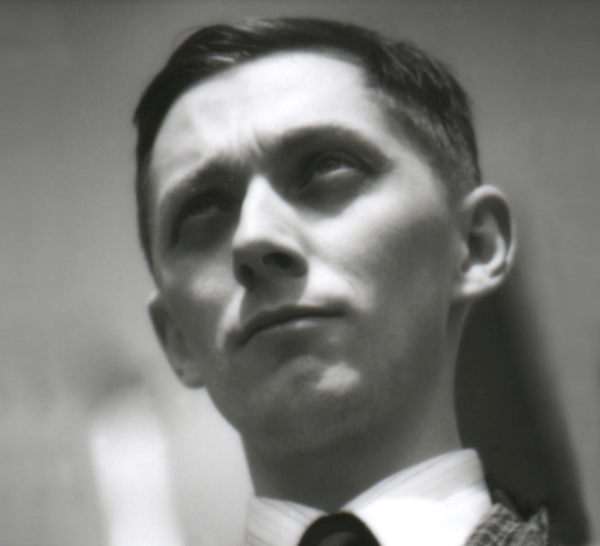
(Mark Reeder in the 80ies)

 
As shown in the movie you was not only a manager, producer, label head for several acts in West Berlin but also was member of the band “Shark Vegas” that was produced by New Order. Which instrument did you play? What was your role within the band? Why was it produced by NO?
In Shark Vegas I attempted to play guitar, keyboards and operate our Revox B77 which played the drum machines and sequencers. We decided to use a 4 track reel-to-reel tape, because after our illegal gig in Hungary, someone had stolen our drum machine. Our first and only Shark Vegas 12” single You Hurt Me was produced during our New Order European tour by Bernard Sumner. We had a few days off, so we went to Conny Planks legendary studio to record it. That ended up being a total disaster. Conny Plank popped in to the studio once and asked “ok lads?” then he just played table tennis outside with his kids mates, or made lunch. The sound engineer was suffering from a slipped disc and had to shout his instructions between spasms of pain from a small camp bed, which was lying below and in front of the mixing desk. The result was dreadful.

In the end, we went back to Manchester’s Strawberry Studios to finish it! New Order really liked YHM and consequently stole most of our ideas and regenerated them for Low Life. Two different 12” singles were released, one on Totenkopf (the Toten Hosen label) and the other on Factory Records, whch also had the sub-title “… but now your flesh lies rotting in hell”.
 

Mark Reeder 6
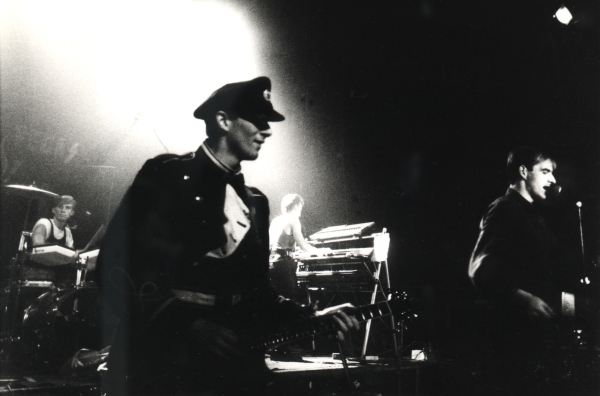
(Mark with Shark Vegas playing live)

New Order just released some nice remixes made by you (there were part of the singles accompanying the New Order albums “Music Complete” and “Complete Music” on Mute). Who came up with the idea to let you remix NO? What is your relationship to New Order nowadays?
My relationship with New Order is as it always was, they are my friends. I wanted to remix Academic for inclusion on my Mauerstadt album, but the band wanted me to remix Singularity and use footage from B-Movie for their live video. I also wanted to make a version of The Game for Mauerstadt too, as I had an idea for it. The version on their album is quite banging and I thought the beautiful lyric doesn’t really get a chance to emerge. Also on Music Complete, there are no slow or quiet songs, so my idea was to strip down The Game, half speed it and feature Bernards vocals. I added a straight throbbing bass guitar and loads of synth strings. This version was performed as a hybrid, during their Sydney Opera House gigs, where they performed with an Orchestra.
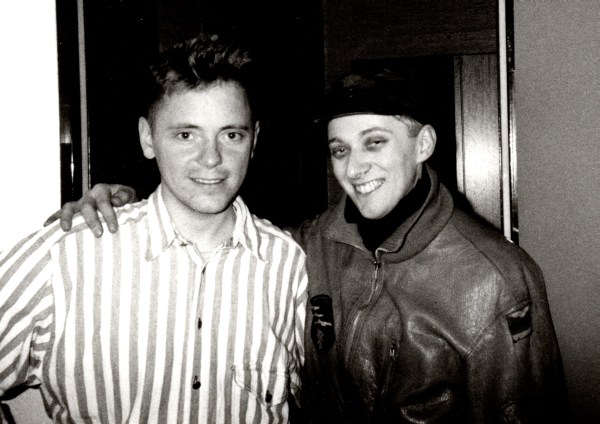
 
Mark Reeder 2
(Mark & New Order’s Bernard Sumner)
 
We already mentioned it in the introduction: the interview was originally planned for the re-release of Die Vision’s album “Torture”. It is not released yet. What happened? Who is behind the project DV and who was involved in the production of this album? What’s the meaning of the name?
The band and their management basically couldn’t agree and so the project has been shelved until they can. My idea was to release a remastered double album of Torture for its 25th anniversary. As I found my original Amiga tonstudio demo mix tapes from 1989 that I had made before the final mixdown, which took place after the fall of the Berlin wall in early 1990. The band name Die Vision (The Vision) is basically a reference to their favourite band and also a play on words.

I gave the album it’s title because it was torture for us all to make. Not just because of the power surges and restrictions, but because of the political situation. East Germany was literally falling apart as we were making this album. I also designed the album cover too. It featured a painting by Berlin-American artist Cynthia, depicting two black slaves who had each had both their hands cut off, because they didn’t meet their quota of sugar beet. I thought, the Easties all think they had it bad living in communist East Germany, but things could always have been much, much worse. I also wanted to cause a bit of controversy too, by having two black people on the cover and not the band. Who knows, maybe we will manage to make it for the albums 30th anniversary?
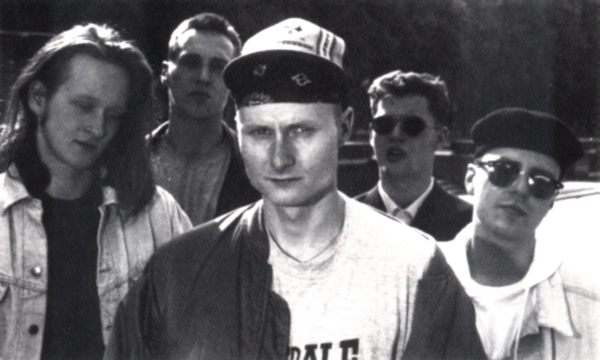
 
Mark Reeder 7
(Die Vision)
 

The album of DV was the last one that was produced for the GDR label AMIGA. You were in charge of the production. How did you get this job? How did AMIGA work as a record company (production, promotion)? Was it different to the work of labels you worked with or run yourself later?

I was invited by the Amiga to produce the Die Vison album in the latter part of 1989. The band were the only group in the communist GDR (German Democratic Republic) who were officially allowed to perform their songs in English. This was because their singer Uwe Geyer studied English at the Humboldt University. Now to study English there, you had to be perfect at speaking Russian too, remember, as English was the language of the enemy. Initially I was told, the band asked for me to be their producer, no doubt I thought due to my association with Joy Division (probably they thought something might rub off?). In reality, the STASI just wanted to watch over me, very closely. The Amiga had already vetted the bands lyrics and approved them for general GDR consumption, but when it actually came to singing them, they were actually quite un-singable. So I asked my writer friend Dave Rimmer (Once Upon a Time in the East) to help rewrite the lyrics and we gleefully added cryptic and subliminal messages within the texts. The A&R had no idea we had done this and accepted everything as it was, because it had all been previously approved. The Brunnenstrasse Amiga Tonstudio studio was a self-created Frankensteins monster. It was fascinating. Almost everything had been made by the engineers themselves, all except their Neumann microphones, a Fender Strat from 1968, a Steinway Grand piano and a Melotron. The Amiga label was run like a civil service. Thousands of people seemed to work there doing unfathomable tasks. Elderly women reading over the LP cover texts, sat in offices adorned with net curtains, potted plants, pictures of cats and ersatz café. It reminded me more of the tax office than a record label. The words fashionable or trendy didn’t belong within their corridors.

Yet in the studio, the basic production was the same as anywhere else really. Except that we had to deal with regular power fluctuations, which would always result in all the tracks on their self-made 24 track tape machine being erased. It was quite a nightmare. I would be biting my nails every time the lights flickered.

As for promotion, there was no such thing in the GDR. They didn’t really have product advertising and certainly not for records. The Amiga had control of all the record shops throughout the GDR and they all took what they were given.

The album did have huge pre-orders though. After finishing each song, I would make a mixdown for myself on tape, just so I could keep track. The Amiga A&R took a few of these early demo mixes and went around East Germany proudly presenting them to all the record stores, as it was the first East German album ever to be sung entirely in English. Before I was anywhere near finished, we already had 32.000 pre orders for Torture!

Naturally, the Amiga was run nothing like an indie label. They didn’t have to be anything, the Amiga were the only players in East Germany with no competition. After the fall of the Berlin Wall, they changed their name from Amiga to Zong in a pathetic attempt to distance themselves from their communist past. I thought that was a wrong move and proposed they change their name to ZONY, but they didn’t see the irony in my joke and they certainly didn’t understand the power of marketing at that point. Finally, I ended up starting my own label using their facilities – I called it Masterminded For Success. Knowing that the Germans loved to abbreviate everything, I wanted to keep the three letters associated with the official name of the STASI, the Ministry for State-security, or MFS.

 
Mark Reeder 3
(Mark in 1984 with some equipment)
 
As we can imagine the equipment in the studios of AMIGA was very different to the machines you knew working with western artists. Which equipment did you use for the album? Was it difficult for you to get into it, to understand how it works? Could you please tell us something about the equipment you used in the 80ies, GDR and nowadays?
As everything in the Brunnenstrasse studio had been made by hand, nothing was like the machines that you saw in a Western Studio. The only recognisable machine was an Otari 24 track, but even that was a deception, as it was only the Otari housing, The interior was a mix of Studer and Telefunken tape machines cobbled together. Their equipment had more or less the same functions, but it all looked self-made. It was quite fascinating. I remember their newly built remote controller that they used to stop and start the recordings on their 24 track machine. It was gaffa taped to an old snare stand and it had a horrific 5 millisecond delay from the moment you pressed the clunky buttons. The studio had a forest of East German Neumann microphones and a few Western amps, like a VOX AC30 or Marshall. All this western stuff had been bought in the late 1960s as part of some five year music production plan. Everything was kept in excellent condition though. They had a room which contained a series of metal coils and spring-like spirals and hanging sheets of metal. These were the reverb plates which could be operated directly from the mixing desk at the click of a gas-cooker style switch. As the drummer of Die Vision quit the band on the second day of recording, I was forced to smuggle a drum machine into the East, as there was only one drum machine in the GDR (a Sequencial Circuits) and that was on permanent loan to the Friedrichstadt Palast Orchestra. Otherwise we had to make do with what was available.
 
You just released the album “Mauerstadt”. It has the same name like your track on “B-Movie” soundtrack. Is there any connection between these two “things”/releases? “Mauerstadt” is full of collaborations. So you worked with The KVB, Queen of Hearts, Ekkoes, MFU or Maja Pierro on tracks for it. How did you select the collaborators? Or how did these collabs happen? Please tell us also something about the way you work with these artists on tracks we can now hear on the album.
Yes of course the title track is the same (although a different mix) I wanted to feature it more.

As for collaborating, I like to work this way. Share my ideas and thoughts. For example, I had made a remix for Queen of Hearts and then I asked her if she’d like to work on a track together. I ended up writing a couple of songs with her for her album, or I remixed The KVB’s White Walls track and then we wrote In sight together. As for New Order, that came about because I had an idea and wanted to see where it would go. Thankfully, I don’t have to fly over to the UK to record anymore, the modern age allows us to bounce sessions and mixes via the internet. If something needs to be discussed that’s easier too, but mostly the artists just let me get on with it.

 
Mark Reeder 4
(Mark playing guitar, photo by Micha Adam)
 
As said, you are from Manchester. Have you still a relationship to the city, music scene there? Any friends from the old days?
Naturally of course, I have family and friends there. I only left Manchester and came to live in Berlin. It’s not that far away, Berlin and Manchester have a strange similarity. I can’t say exactly what it is. Maybe it’s the desperation and thirst for expression and creativity. I’ve performed there a few times recently too. Once for the Manchester International Festival True Faith Exhibition opening in Manchester Art Gallery (I had everyone dancing there in the Art Gallery for the first time, ever). That was great fun and I also performed together with MFU at the iconic Tiger Lounge, (George Best’s old club). That was a wonderful gig. I like Manchester now more than I did when I left, it has become a very cosmopolitan city and I am very proud of it for being able to transform itself like that, but I could never live there again, Berlin is my home.
 
You are a music nerd. And we love it. Please name 10 favourite records that had/have big influence on your life as person and as artist. Tell us why they had such an impact and what they changed in you.
Errr, thank you Juergen 🙂 Well, that is always such a difficult question to answer. So many different things have influenced me over the decades. It’s not so easy just to pinpoint them to only ten, as it leaves out so many other great things. I will try, but please don’t judge me on this. It’s just what I can think of now…

01. Telstar by the Tornados
This was the first record I ever bought. It was 1962. They only played it once on the radio each day and I wanted to hear it again and again and again. I pestered my mother so much she dragged me down to our local record shop (Rumbelows in Denton) and made me buy it. I guess that moment started my record buying addiction. After that, we bought all kinds of records mainly 7” pop singles, by The Beatles, Shadows or Cilla Black and that tradition of buying singles followed me into the 70s with punk. In my opinion, Telstar is the first techno record. It’s dancy, melodic and instrumental.

02. Dr Who Theme by Delia Derbyshire & the BBC radiophonic workshop
This was the first electronic music I ever heard. A brilliant theme. Still mysterious and captivating to this day. As a child, I had no idea how it had been made, but it sounded so futuristic.

03. Electric Ladyland by Jimi Hendrix
The first album I ever bought with my own money. I knew Jimi Hendrix from the telly, he was the flamboyant black guy who played the guitar with his teeth. I heard this album regularly during weekly visits to Manchester’s record shops with my elder cousin and I think I only wanted to listen to it because of the naked girls cover. Each time I heard it though, it sounded different, I wasn’t aware it was a double album. I was determined to own this album for myself. So I plotted a plan to buy it. To accumulate the money, I’d do odd jobs like getting bread, groceries or 20 Park Drive cigarettes for the old age pensioners who lived across the road and they always told me to keep the change. One Saturday, I secretly went into Manchester on my own, I remember it was a very cold day. I was a bit scared going into Rare Records on my own. I bought the album (which was very expensive for a ten year old boy) and I smuggled it home. Petrified it would be discovered, I hid the record sleeve in a box under my bed and never told anyone about it until I was about 16, as I knew if my mum saw it, she’d have certainly thrown it out.

04. Switched on Bach by Walter Carlos
This was the first record I ever heard on a Stereo. My cousin wanted to buy a second hand stereo and so one afternoon we went to some blokes house. There was this huge Stereogramme monster, like a sideboard, lumped in the middle of the room. To demonstrate the wonders of his stereo, he put on Switched on Bach. I’d never heard anything like it. I was fascinated. What was that sound? It was like Dr Who. My cousin didn’t buy the stereo, but once he got one, I would be glued to the thing listening to stereo records by King Crimson, Pink Floyd and The Crazy World of Arthur Brown.

05. Fireball XL5, Stingray, Capt Scarlet, UFO & Thunderbirds scores by Barry Gray
This was the music that got me into soundtracks. Barry Grays scores were always very dramatic and memorable. He mixed electronics and orchestra to create other-worldly soundscapes for Gerry Anderson’s futuristic sci-fi puppet series. It took over 45 years for the music for these TV series to be released.

06. Roxy Music by Roxy Music
Virgina Plain was the record that kicked off the glitter era for me. They sounded so different from all the other bands of the time and used a fusion of synths and rock. This album looked and sounded like no other. It was also around this time that I also discovered the sounds of German Electronic music too, like Cosmic Jokers, Neu and Kraftwerk which set me on a path to discover more music from Germany…

07.Low & Heroes by David Bowie
Although I loved the Ziggy Stardust and Hunky Dory albums, these two albums recorded in Hansa studios, changed the sound and image of David Bowie and I have to say, they probably influenced my decision to visit Berlin. Low was this dystopian, dark and very Krautrock sounding album, which Bowie followed up rapidly with Heroes. Heroes was a little more accessible, but it still sounded amazing. I got the German edition of the album where Bowie sings Heroes in Germanese.

08. An ideal for living/Unknown Pleasures & Closer by Joy division
More than any other, this was the band and album that changed everything in my life. After moving to Berlin, I became Joy Divisions representative in Germany. Then when Tony Wilson formed Factory Records, I automatically became the representative for his label too. The first Joy Division single actually sounded pretty dumpf and so Rob decided to repress it as a fashionable 12”, it still sounded dumpf, but now it was louder. It was only when they went into the studio with Martin Hannet did everything change for the band. They stopped being a ropey punk band and became something entirely different. Their debut album sounded like no other and with Peter Saville’s simple pusle-wave design it looked like no other too. In every aspect, it was light years ahead. Mixing synths and guitars and sound effects, all held together by Ians heart-wrenching poetry. Martin had gained his experience mixing iconic records by Manchester’s punk bands like The BuZzcocks, but realised he could do so much more with Joy Divisions music. I thought everyone must now realise that this is the best band in the world, but in reality, no one was interested. I managed to convince Rob to bring the band to Berlin, as I thought if they saw them, the Berliners would love them. Sadly, only a handful of people came to see Joy Division perform at Berlin’s Kant Kino. I was devastated, but the band didn’t care. This was normality for them, and they were just happy to be in Berlin, to finger the bullet holes and eat schweinshaxe. Of course, my friendship with the band continued after Ian’s death and still continues to this day.

09. Violator by Depeche Mode
Although I have followed this band from their inception, this album was like a revelation. I already knew Francois Kevorkian’s previous work, as I was heavily into underground dance music during the 80s and Francois Kevorkian was my favourite remixer. I tried to buy everything he made, yes, even his remix for Diana Ross! His legendary mixes for the Prelude label (such as Sharon Redd’s Beat the Street) and Kraftwerk set him above everyone else and he has without doubt been a huge influence on my own work. When he teamed up with flood and Depeche it was almost like a dream come true. And he didn’t disappoint. Violator is his masterpiece.

10. Perfect Day by The Visions of Shiva
This record was the first international success for my label MFS. Admittedly, my initial idea was to start a label as a musical platform for Eastie Techno kids, but as they all had no money, no equipment and no experience, I had to fall back on musicians from West Berlin. I had a rough idea about how I would like the music to sound on MFS, and so when I heard Cosmic Baby was looking for a new label, I met him and proposed my concept: To make a more hypnotic, melodic and emotional sounding style of Techno. I liked his interpretation and we released his first single Cosmic Trigger under the moniker MFS Trance Dance. The DJ’s loved it, but said they couldn’t play it because apparently, it wasn’t DJ friendly. I suggested to Cosmic that he look for a DJ to work with and eventually at one of his gigs, he met a young warm-up DJ called Paul van Dyk. Paul appeared to be a nice lad and so I put them in the studio together. The result was Perfect Day. This record went through the roof! Their second release How much can you take? was even more successful, but then came the clash of egos. Paul had his own success with his remix of Humate’s Love Stimulation and Cosmic wasn’t having any of it. They soon split up and eventually, after sequencing our first MFS compilation Tranceformed from Beyond together with Mijk van Dijk and his own hugely successful album Stellar Supreme, Cosmic left MFS for the allure of stardom as promised by BMG.

 
Mark Reeder 5
(Mark, photo by Katja Ruge)
 
“b-movie” including a screening tour are finished, “Mauerstadt” album released… What is coming next? Live touring? On what are you working?
Well, the tour with B-Movie is certainly not over. It’s still ongoing. There are many places that have not yet seen it. I’ve actually just returned from a two month tour of China, where I DJ’d, showed B-Movie and gave lectures about electronic music and Berlin in the 80s and I also produced two interesting Chinese bands there, Stolen (from Chengdu) https://www.youtube.com/watch?v=RVmUZZ_2pgc and Hang on the Box (from Beijing).

Apart from preparing everything for the release of my Mauerstadt album (which is available on CD, DWLD and a limited edition double white vinyl),

I’ve already started work on my next album too. I have just finished a song with an old DJ friend from Ireland John Gibbons, and a new song with MFU, and I recently remixed Vicious Games for Yello.

These tracks will be included on my next album, which will be released early next year.

 
Thanks for this interesting interview
You are very welcome, Juergen.
 

Recommendations:
Mark Reeder album “Mauerstadt”
compilation “Collaborator”
compilation “Five Point One”
New Order’s single “Singularity” w/ Reeder remix


Exclusive Mix:


Tracklist of Exclusive Mix:
01. Delia Derbyshire & the BBC Radiophonic Workhop – Dr Who (original 1963 theme)
02. The Tornados – Telstar
03. The Cure – Purple Haze
04. Say Lou Lou – Maybe You
05. The KVB – Fixation
06. Visions Of Excess – Object To Be Destroyed
07. John Foxx & Steve d’Agostino – Impenetrable
08. Blank & Jones feat. Elles de Graaf – Mind of The Wonderful (Mark Reeder’s Mastermind Mix)
09. Margret Berger – I Feed You My Love
10. Stolen – Copy Shop
11. Blank & Jones feat. Bobo – Loneliness (Mark Reeder’s Alone In The Dark Mix)
12. Blank & Jones feat. Steve Kilbey – Revealed (Mark Reeder’s Overexposed Mix)
13. Hang On The Box – Hunting
14. Blank & Jones feat. Bernard Sumner – Miracle Cure (Heilmittel mix)
15. The KVB – White Walls (Mark Reeder’s Stoned Wall Remix)
16. Mark Reeder- mauerstadt (RIAS Mix)
17. Blank & Jones feat. Vanessa Daou – Consequences (Mark Reeder’s Resultant Mix)
18. New Order – The Game (Mark Reeder spielt mit-edited Version)


Websites:
Mauerstadt Website
Mark Reeder


[Music & Interview]: Georg Bigalke


Music & Interview

Georg Bigalke


Introduction:

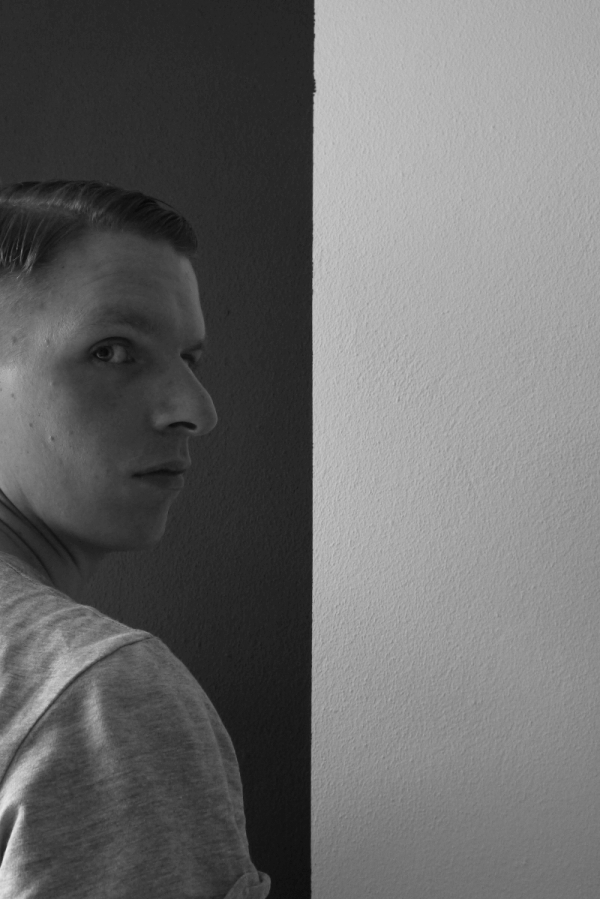
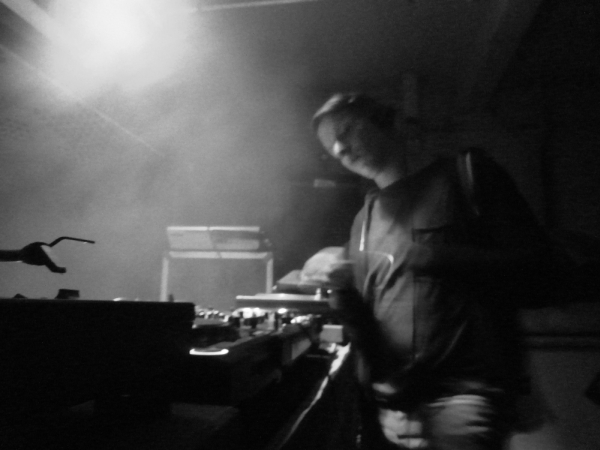
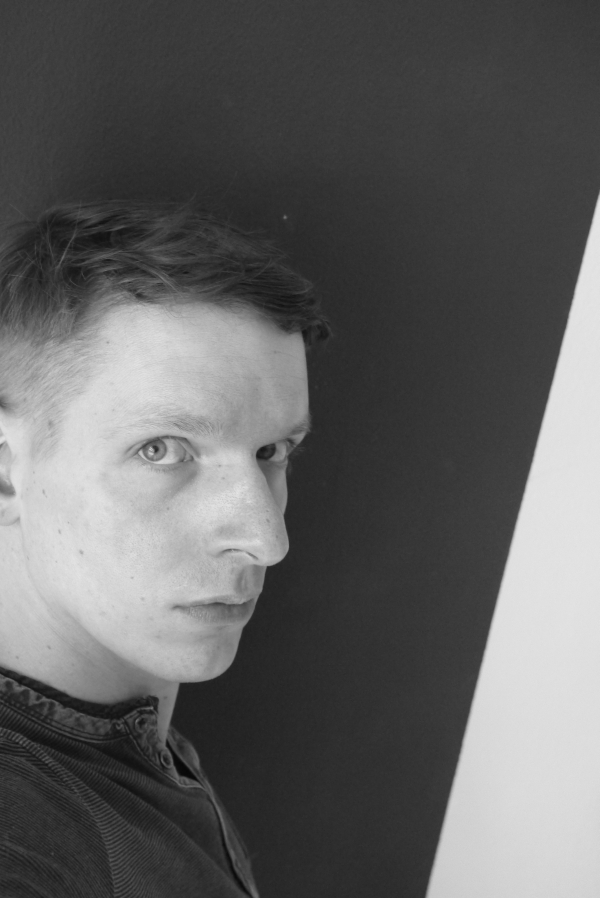
Georg from Leipzig is the man behind the mix series “45 Minutes of Techno” and spin also some records at Distillery in Leipzig etc. He also produces own tracks and remixes.
 

Interview:

hello Georg. Let’s start our small interview with your youth. Where was you born? How was your childhood? What was your favourite music being a teenager, when you began to listen to music?

I am born in Leipzig. My childhood was relaxed, funny, and very inspiring. I was traveling through the days and played much with my friends outdoor in the neighborhood. As a teenager I was listening to NKOTB, East 17, Fanta 4, Queen, Phil Collins, Sting and Bodycount – Just to name a few of my favorites.
 
Georg Bigalke 1

 
You are known for running the nice podcast series “45 Minutes of Techno”. How did you come with the idea in general and especially in limiting it on 45mins? How do you choose the contributors?
45 minutes of your life are always free to have a little hangout while you are listening to some good music. So it’s the perfect length to listen to some musical short stories. The contributors are always artists that inspired me in a certain way, for example with a certain style of music or deejays with certain type of flow.
 
You are a DJ yourself. When did you start it? Any specific moment, a situation so you thought “I wanna be a DJ”? Who are your idols? With whom you want to share your stage?
I started Djing in 1998 – Together with some of my best friends I started to build up a little rave series one or two times a year, The series was called “imperial”. That was the specific moment to think about spinning records in front of people. There are so many interesting artists I’d like to meet – I’d say it’s more something like a “melting pot of idols” than just one certain character.
 
Georg Bigalke 4
 
You played regularly at Leipzig’s Distillery. What is so special about this venue? What do you feel when you start your set there and during the gig?
The distillery is my residency, I started playing there in October 2007. Thanks again to Steffen (Syntax), Marc & Steffen (distillery) – The guys who made this happen.

It feels very special to play there, again and again. It’s like a mystery, I don’t know why. After all this years I’m nervous every time I play there. When I start my sets I’m totally nervous – Every time, again and again. It feels like goosebumps all over my body, like hornets that take off under my skin. 😉

 
Please tell us a nice anecdote that happened during a gig/tour.
It’s very special, if people come to me to say thank you after listening to one of my sets. Actually there’s just one guy I remember: I was playing 7 o’clock in the morning and he came smiling, sweating and dancing onto the stage. He asked me, if I’d like to have some fruits. I like it, because this question shows a moment of normality surrounded by all the techno madness.
 
Georg Bigalke 3
 
Could you please name 5 techno records & 5 non techno records you love and play often?
10 favorite tracks I like to play again and again.
→ Wraetlic – Rats
→ Eomac – Angle in the Marble
→ Tommy Four Seven – Ratu
→ Aphey Twin – Tha
→ Phon.O – Twilight (feat. Pantasz)
→ Blawan – 6 to 6 lick
→ I-F – I do because I couldn’t care Less
→ Ben Klock – Journey
→ Inigo Kennedy – Aleph
→ Mathew Johnson – Ghosts in the AI
 
This feature includes a brand-new track called “Mellartant” which can be downloaded here exclusively for free. When and why did you start with producing? What’s the idea behind this track?

Mellartant describes a certain feeling, like every single track I produced – Mellartant is a certain type of groove. I started producing in 2012 with Zacharias, he is my musical mentor.

More of my output you can find here: Tracks @ Soundcloud

 
Georg Bigalke 2
 
Music business is a hard business so we guess your don’t earn enough money here for your living. So what do you do at day? What’s your “normal” job? And what about your leisure time… any hobbies that are not connected with music?
Actually I work as a project manager for the east german psychotherapists chamber in Leipzig. Most of my leisure time I spend with my family and friends – Hanging around, drinking coffee and eating some cake. 😉
 
We are already at the end of our little interview so I would like to know something about your future plans… what’s coming next?
There are some really interesting tracks that are waiting for their release…we’ll see what happens! I am anxious and fidgety ..
 

Exclusive Track:
“Mellartant”


Websites:
Georg Bigalke @ Facebook
Georg Bigalke @ Soundcloud


[Music & Interview]: JANEIN


Music & Interview

JANEIN


Introduction:

Jan Götze, the guy behind the moniker JANEIN, was born in Leipzig 1993. 20 years later he started to Dj using the name Janein… which it is wordplay. On the one hand stands for “Jan”, his first name, plus the German word “ein”, “one” or “a”, meaning “one person”. On the other hand the artist name shall express a compromise/middle course using the German word for “yes” and “no”, but also being something raw, unprejudiced.
 

Interview:

Hello Jan, we met at a party in Berlin’s Revaler Strasse. Actually I cannot remember the name of the club, but it was just a short stopover for me – coming from another party, listening to your set and returning to the party. Not sure if you remember or ever knew why I wanted to listen to you. I was just going to start my own booking agency with two artists signed already and looking for some more. One of my artists recommended me to check you out. So I did and really liked what & how you played. Unfortunately I had to cancel the agency just before it really started so we didn’t work together in this way, but I am happy we have stayed in contact so we have this nice feature now. So let’s start with the interview. What kind of music did you listen to in your youth and raised your interest in djing? When and why did you start it?

Hey Jürgen, yes i can remember! This was at the end of 2013, when i was starting with Djing. Sadly that your booking Agency never started but i am happy that we hold the contact til now and a good music blog is even better than a agency, i think. 😉 In my youth i listened most of the time to Hardcore, Punk and Metal Music but my dad gave me a electronic influence with Kraftwerk and Pink Floyd.

 
JANEIN 1

 
You were part of a collective in Halle/Saale called “Station Endlos” which just splitted up a few weeks ago, right? How did you get in touch with them back in the days being based in Leipzig? What were the intentions of that group of people?
[Remark 2019: Jan is not longer member/resident of Station Endlos]
Yes, I am a part of the “Station Endlos” collective from Halle. We didn’t split up, we just had to close our club.. because it was not legal BUT we have now a new place and will open it soon – this time legal. 3 Years ago i met Johannes and Leo (two guys behind the collective) in Halle, they told me their vision of opening a club, connecting music and art. So I immediately said “I am in” and that’s the story how I became a resident at the Station Endlos.
 
As mentioned you are from Leipzig and for sure also played in one of Leipzig’s well-known clubs, the Distillery. Is it one of your favourites? How was it playing there?
For me it was always a dream to play in a club with a history like the Distillery Club in Leipzig, so of course it’s favourite! It’s always warm and sweaty there and the most important thing is that I can play 110% from the beginning of my set til the end – I mean the people like it hard and wild, hehe. The other great thing is that I already shared the stage with guys like Rodhad (during a Dystopian Showcase), Monoloc, Matrixxman, Etapp Kyle, Speedy J, Joel Mull and of course Distillery homie Vincent Neumann.
 
JANEIN 2
 
We had already an interview with Rebar who also told us something about the scene in Saxony (read it here). Could you please tell us what you think about it? Is there any difference to the scene in your hometown Halle or the techno capital Berlin?

I think the biggest difference here is that the parties usually don’t run from Friday til Monday. I mean you have here really good clubs and parties but it’s more selected than in Berlin.
 
You already played at several festivals. What do you prefer: club gig or festival? Do you prepare yourself in a different way if you are booked for a festival? What was your personal festival highlight? Any nice anecdote in a club?
I like both, Festivals are great but also I love to play in a club. When i prepare my set I only think about the start… about the intro and two tracks after it. I really like to interact with the crowd. You ask me for a highlight? One highlight was the THINK Festival, Leipzig in 2016, sharing the stage with Rodhad, Chris Liebing, Dixon and Ellen Allien. This does not happen often especially if you’re young artist like me. I mean I have been Djing now since 4 years.
 
JANEIN 3
 
You just started to produce a while ago. Released on a compilation. What was your inspiration to start with it? Any favourite producers?

I started with producing because I wanna get deeper with music. I want to understand the music that I play. My favourite producers at the moment are Escape to Mars, Recondite, Inhalt der Nacht and Kobosil!
 
We just heard the rumour that you are founding your own label right now – starting with a nice sampler/compilation. Why do you think the world needs another techno label? What will be your concept?

Yes I start my own label with my good friend Stigmatique and the label will be called “SEELEN”. Our first release will be out at the beginning of 2018 – a Various Artist sampler on limited double vinyl and as download via Bandcamp. The idea behind the label is to give Leipzig a new form of Techno and to give young artist and talents the chance to put out their stuff which has often a high quality – so they can show it to the established artists. Maybe it’s a game changer.

 
JANEIN 4
 
Most people in the techno world have to do a normal job or just study with the help of their parents. How does your daily life look like?
I don’t study, I work as a service provider on a part time bade (4h a day). That’s what I do from monday till friday, from friday till sunday I am a DJ 😉

I also have the option to pause the job for a couple of days, weeks or months whenever I need it. Example, in the beginning of this year i was two months on New Zealand and Australia Tour.. so I quit the job for that time and began it again when I was back from tour.

 
This feature contains the exclusive track “Σ”. Could you please tell us something about it? Was there any specific moment you got the idea for it? How did you produce it?
The track is called “Σ” what means “sum” or “total”.. so that track is the total of all what I learned til now. The track is produced with the Jupiter 80, Roland TR8, Roland System 1M , Space Echo RE-201 and some VST- Plugins. I got the the idea behind it during a jam session. The track was mastered by Nihad Tule.
 
JANEIN 5
 
We are already getting to the end of our small interview. So here comes the question about your future. What is already planned? What do you want to achieve in the near and far future? What are your dreams?
For the future I want to produce more stuff and set the focus on the label working together with some nice artists. And of course I wish to play some memorable gigs.
 

Exclusive Track:
“Σ”


Booking:
Apelago


Websites:
JANEIN
Seelen @ Facebook
Seelen @ Soundcloud