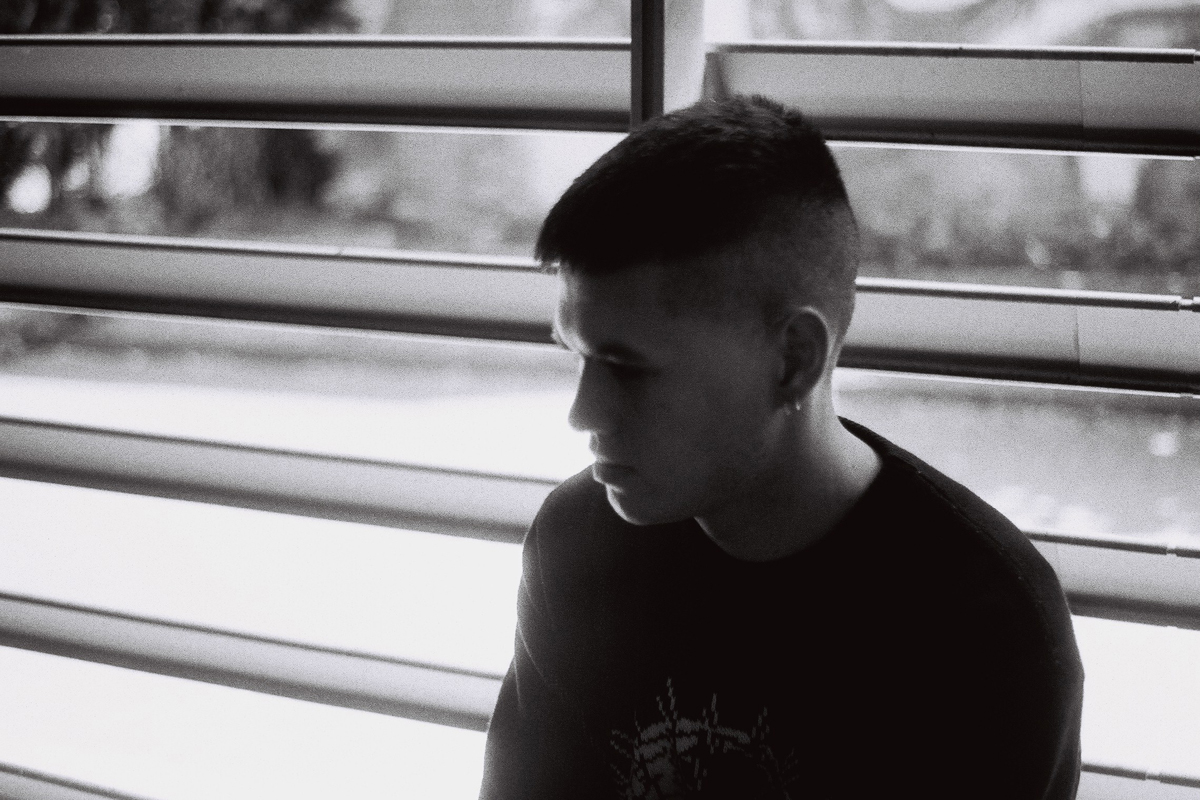
Press Info:
First discovered through Ōtomo and played by Ghost In The Machine, but now it’s our turn to push Gilfoyle out there. It’s always an honor to promote artists from own soil, coming from a city that is not known for the sound Märked stands for.
Together with Kracht there’s Tanzofos. What we have here is a big warehouse kick drenched in punchy mid and low-mid frequencies. and metallic and squeaky sounds. We see this getting played at primetime.
Continuing the EP with title-track PCL, where Gilfoyle creates a ready to battle vibe. The contrast in the first minute, to where all the elements are at play is very much heard when swords make their entrance.
Iridium Flail hits with most grit and no fear for distortion knobs. An almost slowed-down hardcore-esque anthem with a dose of alarm funk caught from the synthesizer.
End the EP with the Havoc package; the original is really drilling and heavy on the industrial stabs. It’s the kind of track to make the transition to a second half of a dj-set in the later hours of the night.
Falhaber’s remix makes for a really easy-going and danceable track, giving a lot of space to all of the elements. Not the sound that we know him for, but certainly interesting to have especially him contribute the lesser rawest track.
Sensive remixes Havoc at the higher pace of 140 BPM. It’s kept at sizzling speed by rattles of different kinds of percussion. By not totally sticking to what people see as an authentic remix concept, Sensive adds a new sound from a synthesizer and gives the remix what it needed.
Press Info:
Rebels Conspiracy, independent record label, based in Berlin, founded by DJ/Producer Cristian Marras; celebrates its first year, by launching the first edition of R.U.N. (Rebels United for Nature); a 16 tracks Compilation that will be proposed with annual frequency.
Inspired by the awareness of the decadence of our civilization, and the need to find in music a way to benefit our environment, gong beyond the artistic expression, made for the pleasure of the listeners.
Several artists, sharing the same sensibility for contemporary social matters, give their contribution through this compilation, that aims to collect a fund to be entirely donated as support to an exemplar non-profit and non-governmental association, active since many years in different countries operating in human rights protection, environments and animal species preservation.
Press Info:
The Meaning Of Rave delivers first debut EP release from well recognized and talented high-speed techno weapons specialist – YÅ. Paris born Yanis Bellalem has proven himself in a techno horizon by not only delivering great tracks but also managing his own Mainmise Records and pushing his sound with Rearguard collective.
Expect high tempo rhythms with 90s flavour synths and trancy grooves to hit you with YÅ’s meaning of rave.
Press Info (German):
Scanning Backwards, das zweite Soloalbum von Phase Fatale nach seinem 2017er-Debüt auf Hospital Productions, ist Musik über Kontrolle. Mittels der Verbindung von Klang als Waffe und psychologischer Manipulation als konzeptuelles Fundament, erforscht Hayden Payne Wege, auf denen Musik – und besonders Subbassfrequenzen – benutzt werden, das Denken zu beeinflussen als auch Emotionen und Verhalten zu synchronisieren: von Militärtechnologie zu Sound Systems zur Körperlichkeit und Sexualität queerer Technokultur.
Ausgehend von seinem innovativen Post-Punk-Ansatz zu Dance Music – nachzuhören auf seinen EPs für unterton und Ostgut Ton – bezieht sich der Berghain-Resident auf seinen Hintergrund als Gitarrist und Toningenieur. Daraus entstand auf Scanning Backwards eine berauschende Mischung aus gebrochener Rhythmik, Noise- und Shoegaze-beeinflussten Technos, oft mit langsamerer Gangart. Am Ende steht Musik mit Platz und Tempo zur weiteren Ausdehnung, das intensive Brausen von Frequenzen hervorhebend, die sowohl in der sonischen Kriegsführung und funktionaler Dance Music vorherrschen. Im Verlauf der acht Stücke, die eine Kombination aus historischen und fiktionalen Narrativen aus Literatur und Science Fiction im Titel tragen, ergründen Paynes rhythmische Exkursionen unterschiedliche Manifestationen von Klang als Macht – spezifisch im Sinne des Berghains als musikalisches Instrument. Dies reflektiert auch das Artwork des Albums: einem frühen Flyer der Partyreihe SNAX entnommen und offensichtliche Hommage an die Fetischisierung von Machtdynamiken.
In seinen eigenen Worten: „Alle Stücke dieses Albums, gleich welcher Stil, habe ich zugeschnitten, um auf ganz bestimmte Weise im Berghain zu klingen. Im Laufe der vielen Jahre als Tänzer inmitten des Dancefloors und auch während meiner DJ-Sets als Resident bemerkte ich, welche Frequenzen den Körper so richtig penetrieren. Das beinhaltet Sprache, Hochfrequenz- und Hirn-penetrierende Instrumentierung, Sägezahn- und Schlagbohrhammerästhetiken – die hatte ich bis dahin noch nicht so oft benutzt, denke aber, dass sie Einfluss auf das Denken und Gedächtnis haben. Das trifft besonders zu auf einen Ort, der schwule und Fetisch-Geschichte auf unerwartete Weise mit Musik kombiniert, auf fast kultische Art. Eine musikalische und physische Deinstallation und Neuprogrammierung, Psychic Driving und De-patterning, das Löschen und Ersetzen von Erinnerungen.“
Scanning Backwards wacht über die manipulativen Eigenschaften elektronischer Musik (Mantras, Loops, unterschwellige Botschaften) und wie Rhythmus sowohl Bewegung als auch das Denken in Einklang bringt. Ein Puls koordinierter Klang- und Hirnwellen.
Press Info (English):
Scanning Backwards, Phase Fatale’s second full-length album following his 2017 debut album for Hospital Productions, is music about control. Using the connection between weaponized sound and psychological manipulation as a conceptual foundation, Hayden Payne explores the ways in which music – and sub frequencies in particular – are used to influence thinking and to synchronize emotions and behavior: from military technology to sound systems and the physicality and sexuality of queer techno culture.
Known for his innovative post-punk takes of dance music as featured on EPs for unterton and Ostgut Ton, the Berghain resident draws on his background as both a guitarist and sound engineer to create a heady mix of broken rhythms, noise-, and shoegaze-inflected techno, often at slower tempos. The result is music with space and pace to expand, highlighting the intense rushes of frequencies found in both sonic warfare and functional dance music. Over eight tracks named after a combination of historical and fictional narratives from literature and science fiction, Payne’s rhythmic excursions explore different manifestations of sound as power – specifically within the context of seeing Berghain as an instrument itself. This is also reflected in the album artwork, taken from an early flyer for the SNAX party series and an obvious ode to the fetishization of power dynamics.
In his own words: “All tracks on the album, no matter the style, were tailored to sound a certain way in Berghain – something I figured out through years of dancing in the middle of the floor, DJing as a resident and investigating what frequencies really penetrate the body. This includes speech and high-frequency, brain-penetrating instrumentation and drilling textures that I had not utilized so often before, but which I think also have an effect on thought and memory. It’s especially true in a space where gay and fetish roots combine with music in unexpected ways, almost in a cultish manner. A musical and physical deprogramming and reprogramming, psychic driving and de-patterning, the erasing and replacing of memories.”
Ultimately, Scanning Backwards surveys not only the manipulative properties of electronic music (mantras, loops, subliminal messages) but also how rhythm facilitates both moving and thinking in synchrony; a pulse of coordinated sound- and brainwaves.
Press Info (German):
„Was sucht Orte aus, die einen binden? An die man erinnert. Die man fühlt, wo man sich wohl fühlt. Die, die die eigene Existenz bestätigen. Dieser, mein Ort ist das Oderbruch. Diesem Ort ist dieses Werk gewidmet.“ – R.P.
Oderbruch, das fünfte Album des Berliner Producers Shed, verhandelt einer klaren Linie folgend – Album- und Tracktitel, Artwork des Malers Arnim Tölke (Ectoplasma (Oderbruch), 1999, Acryl auf Leinwand) betreffen Sheds Zweitwohnsitz – persönliche und weitergedacht auch historische Assoziationen einer Region Ostdeutschlands, die als Marschland, Frontlinie und Grenzgebiet viel Wandel erfuhr.
Gemeint ist aber kein inhaltlich konzeptuelles Album oder regionales Standortmarketing, sondern eine ambivalente Ode auf das Oderbruch, nahe dem René Pawlowitz aufwuchs und in dem für ihn mehrere Generationen Familiengeschichte wurzeln. Das bedeutet: kein heimatlicher Lobgesang, sondern musikalisches Abbild persönlicher Biografie und historischer Ereignisse – der Treff an der Tanke, am Ufer mit Blick auf’s Wasser, Techno aus dem Autoradio während der langen Fahrt zur nächsten Party, entlang streuobstbehängter Alleen, Trauerweiden und darbender Industriegebiete. Dazu gehören aber auch die konkreten Naturklänge, Kindheitserinnerungen und Orts-Geschichte, wie der Beginn des Untergangs der NS-Zeit in der Schlacht um die Seelöwer Höhen, die das Bruch für immer prägten.
So sind die neun instrumentalen Stücke als Tropen für kollektive Erfahrungen und Sehnsüchte entlang der einzigartig zusammengeführten Achsen Breaks, Bass, Techno, Jagdhornsinfonik, Ambient und Hardcore zu verstehen. Mehr als je zuvor gleitet Pawlowitz’ Musik in eine klangliche Umschreibung landschaftlicher Weite, was auch bestens als musikalische Parabel für Szenen in der Stadt und auf dem Land taugt. Locals nah und fern, die Shed in den vergangenen 16 Jahren als Live-Act, DJ, Labelbetreiber, Plattenhändler und Producer mitgeprägt hat.
Auf wenige trifft Letzteres so zu wie auf Pawlowitz alias Head High, Hoover, Wax, The Higher, WK7, Equalized, The Traveller … Shed ist dabei Pawlowitz’ bekanntestes Pseudonym, mit dem der gebürtige Brandenburger 2003 auf seinem eigenen Label Soloaction und 2008 auf Ostgut Ton debütierte.
Oderbruch ist seine erste Veröffentlichung auf Ostgut Ton seit neun Jahren. Am 8. Dezember spielt Shed live das Debüt von Oderbruch in der Säule im Rahmen der Berghain-Klubnacht.
Press Info (English):
„What binds you to places? To remembering them. Places you can feel, when you feel at home. Places that affirm your very existence. This place for me is the Oderbruch. This album is dedicated to it.“ – R.P.
The fifth studio album by Shed aka René Pawlowitz centers thematically on the Oderbruch region in former East Germany where the producer and DJ grew up and continues to split his time (when not in Berlin.) Both the album and track titles as well as the artwork by Arnim Tölke [Ectoplasma (Oderbruch)] reflect Pawlowitz’s deeply personal associations with the borderland’s marshy landscape, as well as enormous political and historical changes the region underwent as the last Eastern front during World War II – and, later, following the dissolution of the GDR.
Nevertheless, Oderbruch is not a concept album. Instead, it’s an ambivalent ode to the area in which Pawlowitz’s family has lived for generations. It’s a musical reflection on place and personal history: meeting up at the local gas station, a view to the water, techno rattling the closed windows of cars peeling out toward Berlin or the next local party, cruising along rural parkways flanked by trees with fruit ripe for picking, past weeping willows and abandoned factories where industry once thrived. Outside buzzes with the sounds of nature inextricably linked with childhood memories, but also a landscape defined by the bloody defeat of the Nazis at the Battle of Seelow, ushering in the fall of Berlin and with it, the entire fascist regime.
The album’s nine tracks are inspired by the intertwined nature of the subjective and historical, which ring through Shed’s idiosyncratic take on breaks, bass, techno, symphonic ventures, ambient and hardcore. But unlike Shed’s previous records, Oderbruch incorporates broad pastoral landscapes – left behind and returned to.
Both fit Shed, who under various aliases (Head High, Hoover, Wax, The Higher, WK7, Equalized, The Traveller) has long influenced a number of dance music scenes in Berlin and beyond.
Oderbruch is his first release on Ostgut Ton since 2010’s The Traveller. He will present the album in a special live performance in Säule on December 8 during the Berghain Klubnacht.