Info:
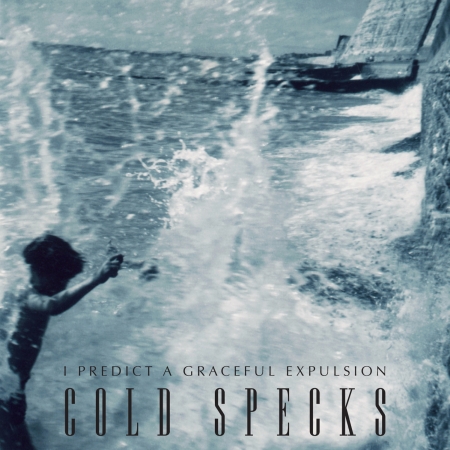
Cold Specks is songwriter and vocalist Al Spx from Etobicoke, Canada, who now lives in London. The band’s name is taken from a line in James Joyce’s ‘Ulysses’:
“Born all in the dark wormy earth, cold specks of fire, evil, lights shining in the darkness”.
Describing her sound as ‘Doom Soul’, Cold Specks’ music is steeped in the musical traditions of the Deep South. No wonder then that Al cites the Lomax Field Recordings and James Carr as influences along with Bill Callahan and Tom Waits. With a voice that evokes the ‘spirit feel’ of Mahalia Jackson and the visceral tones of Sister Rosetta Tharpe, Cold Specks’ sparse arrangements and chain-gang rhythms stop you dead in your tracks.
“My little brother, who was spending his summers with our mother in Toronto, had always told me of this girl he was friends with that had this amazing voice,” recalls Cold Specks’ manager, Jim Anderson. “As a producer I’d heard that so often that I didn’t take too much notice. Then I came in one night to find him and a few friends drinking in the flat and playing a CD of her demos. I was completely transfixed and just kept pressing repeat. I knew I had to work with her. I eventually persuaded her to come over. At that point she had never played with another musician and was completely self-taught with her own unique tuning and timings, which we had to decipher.”
“Jim convinced me to fly out and work on the record for a few months,” explains Al Spx. “That was a year and a half ago. I guess I’m permanently based here now. I didn’t know anyone when I moved here. We needed musicians and Jim knew a bunch. Rob Ellis (PJ Harvey’s regular collaborator) has been helping out with some arrangements and percussion and Jim’s old friends Pete Roberts (guitar), Thomas Greene (piano) and Tom Havelock (cello) also play on the record.”
Info:
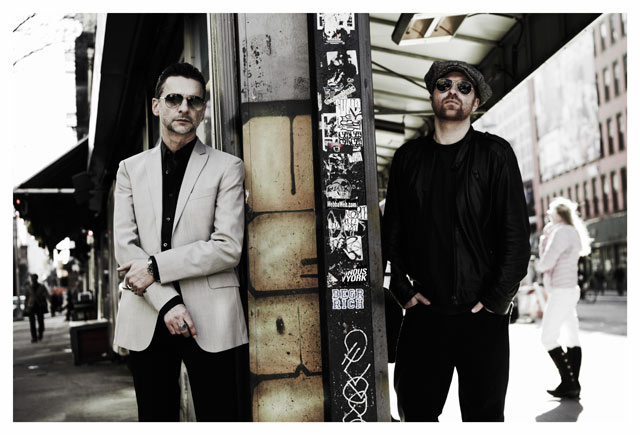
“THERE was no real script,” says the laconic Rich Machin of SOULSAVERS’ extraordinary fourth album THE LIGHT THE DEAD SEE, a set of songs of majesty and momentum. “It just rolled and rolled; it was effortless.” Yet the writing was on the wall from the moment Dave Gahan stepped in to tackle vocal duties that this was going to be something very special. “We realised we were coming from the same place in so many ways,” adds Machin. “He’s really laid himself bare on this record, his performances are astonishing: he really is a terrific singer.” Says Gahan, “Everything about it was relatively unplanned, surprising: a magical thing. We were a perfect match and I’m very, very excited about this record.”
Soulsavers – the music and production team of Rich Machin and Ian Glover – have been a growing force since 2003’s debut Tough Guys Don’t Dance. 2007’s It’s Not How Far You Fall, It’s The Way You Land brought their dark flair to a wider audience. The inimitable Mark Lanegan served as primary singer, though there were also vocal contributions from Will Oldham and Jimi Goodwin. Tracks such as “Revival” and “Kingdoms Of Rain” revealed a broodier outlook, with a slow-burning, gospel tinge. In 2009, third album Broken confirmed that Soulsavers were moving away from early electronica to earthier guitars, use of space and what Machin described as “a soulful twist”. Lanegan again led the vocals on stand-outs such as “You Will Miss Me When I Burn” and “All The Way Down”, with other guest vocalists including Oldham again, Jason Pierce, Richard Hawley, Mike Patton and Gibby Haynes. Clearly there was no shortage of acclaimed singers ready to lend their lungs to Soulsavers’ stirring, seductive, soothing or startling creations.
Soulsavers, venturing out from the studio to the road, were invited to support Depeche Mode on the European leg of their vast and eventful 2009-10 Tour Of The Universe, during which tour Dave Gahan bounced back from more than his fair share of illness and injury. Here, the seeds of The Light The Dead See were sewn. “We got to know each other,” says Machin. “I really warmed to him, thought he was a particularly nice guy. Dave said he was a fan of our previous albums, and watched us almost every night, and, as you do, we said: Hey, we should work on something, at some point in time…”
“The tour together was great,” recalls Gahan enthusiastically. “I love Soulsavers and I’ve also been a Lanegan junkie for years. Rich mentioned doing some writing, and I told him to send over any pieces he liked, however minimal. About eighteen months ago he sent the first. I was taking a break, with my band having finished the long tour. So I said: let me sit with this, see what happens. And it was right up my street. What Rich does – big grinding bluesy organs, gospel choirs – somehow that touches something in me. I don’t know what it is. Maybe it’s all those years of being forced to go to Sunday School! He sent me more and just left it open, stuff I could get into, no pressure; perfectly atmospheric pieces that inspired me. Three songs in, I was hooked – keep ‘em coming! It was an experiment, and both of us weren’t sure what would happen, but now I’m so pleased with this, over the moon with it.”
With Gahan penning lyrics for the music and recording his own vocals in New York, then Machin building up the results into fully-formed and arranged epics, the international project was a case of “chemistry working”. “Nothing he did, did I need to alter,” says Rich. “Everything he did just felt right. We both took an opportunity to step away from electronica – which we both love – and do something warmer, to go for full-takes, to not Pro-Tools the life out of it. There’s a human element. It doesn’t need to be “perfect”; it needs to just feel really good, to have room to breathe. We both enjoyed just going where the moods took us.”
Although creatively the pair gelled instantly and consistently – “Hearing the album, I’m almost going: how did that happen? I’ve surprised myself!” laughs Gahan – the “human element” did throw up a couple of testing obstacles. Gahan was recovering from well-documented illness when the project began. “I’m very good now,” he says. “I still have my hospital visits now and again, but fingers crossed I’m in good health.” Then, just as the pair got settled into a rhythm, Machin acquired a “horrendous” ear/hearing problem. “I woke up in the middle of the night in agony; it was like someone was drilling into my ear.” He lost his hearing in one ear for around nine months, and is still learning to manage tinnitus. It’s not music-related either. “Ironically,” he says, “they told me my hearing in my bad ear is better than in my good ear. It was stressful. I thought: am I done? Is that it? You do begin to wonder. I put everything on hold for a while, then decided I’d better stop feeling sorry for myself and just get on with it, at least when I had good days. When it began to clear up, I was half-expecting we’d have to re-do everything, but it sounded great, so we pushed on. The train hadn’t come off the tracks.”
“At one point,” says Dave, “we both realised: oh, we’re making a whole album here!” Both were keen that it played with a “clearly defined” Side One and Side Two, and didn’t “overwhelm” the listener with excessive length. “There’s no filler,” says Rich. “We wanted it intense, not drifting like so many albums do.” “It’s a real album-lover’s album,” concurs Dave. “I was listening to Bowie’s “Ziggy Stardust” a lot, always one of my favourites. It still gives me goose-bumps on my arm. And I wanted to achieve that kind of level: I’d think: is this moving me? If it’s moving me, I’m pretty sure it’s going to move other people.” As you can hear in the surges of “Presence Of God”, the epic scale of “Gone Too Far”, the yearning of “Take Me Back Home” or “I Can’t Stay” or the snag and snarl of “Bitter Man”, it will.
Gahan’s lyrics and melodies came to him with spontaneity and passion. “About five songs in, I realised I was writing outside myself. I was having a go at myself, to be honest: my questions around faith, and God, or the lack thereof at any given moment. Sometimes I’m full of faith, but there are always questions. And I struggle with letting go of control of what’s going on around me. This album became very therapeutic. No restrictions. Coming out of getting sick myself, I found I HAD to get this stuff out of me. This music gave me the perfect palate to play with the BIG questions that we all ask when life becomes less about what can we GET, than: what can we DO? I’ve been very fortunate, and I’m privileged in my life, so I want to do things I feel really connected to now, otherwise there’s no point. Rich and I had both come out of something difficult. This is something to do with that. It was a wonderful experience.”
“People don’t make these grander-sounding records any more because of budget,” remarks Rich. “We did this on a shoestring, relatively, but I didn’t want to cut corners, so there was some begging, stealing and borrowing. We did the strings in Sunset Sound in the room where the Beach Boys did “Pet Sounds” and Led Zeppelin did some of their best-known tracks, and I love that side of things, thinking to myself: Brian Wilson sat right there. I can never quite get my head round how I ended up here, but for someone with a love of music history, it’s pretty great. So many bands are happy to make the same album three times, but I need Soulsavers to keep changing to keep me excited. The first person I played this to was Mark Lanegan, a good friend, who I trust to give me honest feedback. He doesn’t do bullshit. And he loved it. He sings a subtle cameo on “In The Morning”, and that helps the passing on of the torch…”
Says Dave Gahan, “Rich is Soulsavers, and Mark’s been part of that up to this point, and may well be again in the future, but it’s now an open door. I think this is the beginning of a very interesting friendship! Depeche Mode will get busy again soon, but I’d love for Rich and I to work together again. Look, I’ve been in a successful band for years and people have their impressions, things they like or don’t like, which is fair enough, but I don’t want that to overshadow the importance of this record. It’s a Soulsavers record, and I’m lucky just to be a part of it.”
“Soulsavers comes in waves and curves and changes,” adds Rich Machin. “It’s all about freedom, but on a record I want it to lock into a unifying feel.” With regard to the other musicians, there was a “cleaning house”: in Rich’s words, it was “time for some new blood”. Crucial to the sound were bassist Martyne LeNoble (Porno For Pyros founder member who’d played on “Broken” and on Gahan’s “Live Monsters”), drummer Kev Bales (Spiritualized, and “hands down my favourite drummer”, says Machin), guitarist Tony Foster (Spiritualized & Julian Cope) and organist/keyboardist Sean Read. “It’s an ever-rotating world of friends, which makes the whole thing more enjoyable.” Strings were arranged by Italian composer Daniele Luppi (“Broken”, Danger Mouse, David Lynch), who’s worked on many films, sharing Rich’s love of giants like Ennio Morricone and Bruno Nicolai. (although, Rich adds that the two soundtracks he’s been most into lately are the Chet Baker documentary “Let’s Get Lost” and Neil Young’s “Dead Man”).
The title “The Light The Dead See” comes from a deeply affecting work by the cult American poet Frank Stanford (1948-1978). “He was exceptional: I’m a big fan, and it fits the mood totally,” says Rich, (who’s previously acknowledged his admiration of Charles Bukowski, John Fante and William Faulkner’s Southern Gothic tales). “Yes,” says Dave, “You can walk around this planet with the blinders on, and sometimes it takes big things happening to you to shift you to a different consciousness. Let’s say I’ve had opportunities to turn this around; I’m blessed. I was out there on the edge awhile, and I saw the possibilities of what could be…things like addiction, which is just a sad old journey. But to be able to turn things around, there’s a redemption about that. So if you ask me what this album’s about, I’d say two things. One, exactly that: what IS it all about? And two: redemption.”
Info:
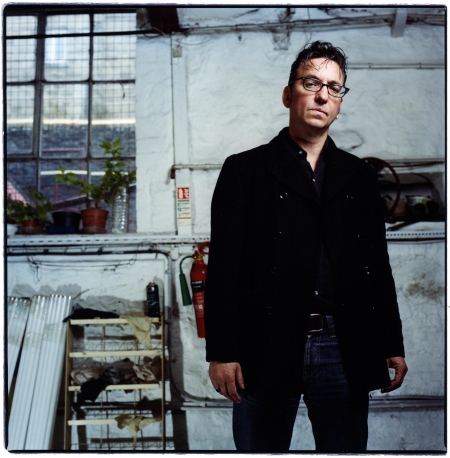
From the outside, it looks like no place for strangers. Just a shade west of Sheffield city centre, Fagan’s pub stands alone, among factories, depots and warehouses. Other hostelries lure you in with the promise of hot food and happy hour. But Fagan’s makes no such concessions. Anyone making the necessary leap of faith, however, is rewarded with the best fish and chips in Sheffield, a landlord (Tom) who bluffly litters his conversation with quotes from Sophocles and Shakespeare and a celestial pint of Guinness. All the original fixtures and fittings are present and correct. Fagan’s is a beautiful contradiction: not quite what it first seems, yet Sheffield through and through. More than at any time in his creative life, it seems entirely appropriate that we should find Richard Hawley here. “Welcome to my world,” he sings by way of greeting, to the tune of the eponymous Jim Reeves song. “I’ve been coming here over half my life.”
Set aside whatever you think familiarity has taught you about the artist whose name graced 2005’s Mercury-nominated Coles Corner, its top ten successor Lady’s Bridge and 2009’s universally-acclaimed Truelove’s Gutter. If Richard Hawley had indefinitely continued to plough the sonic furrow that had prompted the likes of Nancy Sinatra, Duane Eddy and Lisa Marie Presley to enlist his services, who could have blamed him? With the release of Hawley’s seventh album Standing At The Sky’s Edge, something has changed. No strings, this time. “I decided to play the guitar this time,” he explains. For one of his generation’s most venerated guitar players, it seems like an odd thing to say. At least it does until you press play. Electric guitars fill the newly vacated space with colours that mirror the blasted industrial sunsets of Sheffield. The inspired involvement of Alan Moulder at the mixing stage added extra bite to the finished article. But way before that moment, Hawley knew he might be onto a good thing with the very first reaction he elicited. “My wife said she’s always wanted me to stop being so black and white,” he smiles, “So as far as she was concerned, it didn’t come a moment too soon.”
Zone in to the album’s opener and you might be inclined to agree. One minute and twenty seconds into She Brings The Sunlight, none of the usual reference points used when describing the Hawley’s music will help you. As the song explodes into savage psychedelic colour, Hawley sounds like a man drilling into a bedrock of white noise and hitting a slick of pure melody. The sense of scale is breathtaking. Hawley has written no shortage of love songs over the course of his life, but this is something different. “The song is about being physically attracted to someone you truly love,” he explains. “People talk about that like it’s a cheesy thing, but I wanted to do justice to what it really feels like. I want to f***ing applaud when my wife walks into a room. It’s like a revelation.” In order to do justice to that scale of emotional intensity, Hawley reconnected to some of the music that provided him with some of his maiden epiphanies. He may have grown up listening to his parents’ country and rock’n’roll 45s. As a teenager though, seeking to establish his own musical identity, Hawley’s recreational experimentation led him to lysergic expeditionaries like Syd Barrett, The Stooges, The Seeds, Strawberry Alarm Clock and The Chocolate Watchband.
A renewed fondness for those artists seemed to dovetail into changes that were happening in Hawley’s own world. The death of close friend and musician Tim McCall prompted 45 year-old Hawley to ponder the purpose of our own brief time here. Similarly instrumental in marking the creative path ahead was an encounter between Hawley and a friend who had recently lost his wife. “We were talking about astronomy. I’ve spent my whole life looking up at the stars, but for this person, it was a relatively recent thing. I asked him why he had taken it up, and he said, ‘I’ve always been interested, but I took it up because I wanted to see if my wife’s face was there.’ It hit me like a bullet that this level of loss could be turned into something so beautiful.”
The reverberations of that conversation are detectable on one of the album’s keynote performances. For a song suffused with such a sense of cosmic serenity, Don’t Stare At The Sun covers a huge distance: a meditation that took inspiration from – on one hand – a woozy morning shared by young son and sleep-deprived father flying a kite in the park and – on the other – the fate that met Isaac Newton when he decided to stare into the sun. “He burnt the retinas in his eyes,” explains Hawley, “so that, from that moment on, everything he saw was gold.”
For Hawley all these disparate elements seemed to lock into each other quite naturally on the songs he found himself writing. Shortly after finishing work on his last album, he acquired a new companion – “a clever as f*** collie” – which was all he needed to disengage with popular culture and embark on long walks to Eccleshall Woods on the outskirts of the city. Daring himself to get hopelessly lost, he stumbled upon one of Sheffield’s oldest monuments. Known as The Charcoal Burner’s Grave, this was the final resting place of George Yardley and one of the first places to bear the name of Sheffield. This was all he needed to effectively light the touch paper on spooked folk-noir ballad The Wood Collier’s Grave. “It’s like entering another world,” says Hawley, “There’s neolithic shit going off in there. Graffiti from 1,000s years ago.” It was here also that Hawley was inspired to write the album’s most cathartically raw track. Built around the simplest of blues riffs, delivered with a raw abandon that suggests countless turntable miles notched up listening to the MC5, Down In The Woods surely looks set to be an instant live favourite. Another vindication of Hawley’s decision to replace the strings of yore with guitars and – thanks to the resourcefulness of his keyboard player John Trier – rocket noises.
You only need to gaze at the titles of records like Lowedges, Coles Corner and Lady’s Bridge to realise that Hawley’s music doubles up as a rich psychogeography of his hometown. As with those albums, Standing At The Sky’s Edge derives its title from an area of Sheffield (Sky Edge) which achieved a degree of infamy as a result of the gang warfare which stemmed from illegal gambling rings there. The problem became so serious that the Flying Squad was formed in order to re-establish law and order here. “Knives are a part of Sheffield’s history,” says Hawley, “Our parents made them. We carried them around as kids, but we were always taught to use them responsibly, you know?” On the title track, Sheffield’s past acts as the backdrop to a dystopian present of knife crime exacerbated by Governmental neglect. “The difference between then and now,” he says, “is that the biggest gangsters are in power, finishing off the asset-stripping that Thatcher started decades previously.”
If there’s an overarching theme to Hawley’s album, it’s that there’s beauty and meaning to be found in accepting how tiny we are in the general scheme of things. On the smouldering cinematic declamations of Leave Your Body Behind You, the grief felt at the passing of friends is alchemised into something almost celebratory. “So much damage has been done to this world by people who get all their knowledge from one book – be it The Bible or whatever. And if we could just allow ourselves to be liberated by the fact that this is our only time here, we could just get on with what really matters. I really think we could have put a man on the moon 1000 years ago if we accepted that.” It’s a theme to which Hawley returns on the album’s final song. “Here we are/Lent to the earth by the stars,” begins Before (featuring a guest appearance from musician Martin Simpson), before embarking on a journey from starlit reverie to a slo-mo display of fretboard pyrotechnics. “We create entire religions in order to convince ourselves that we’re not going to die,” explains Hawley, “They tie us down and they make us ugly and unkind.” Because, as we established, this pub isn’t all it seems, the landlord interjects with a line from Hamlet. “It’s the gravedigger scene,” says Tom, ‘Imperial Caesar, dead in clay. Might stop a hole to keep the wind away.’ That’s the basic premise of all science. Matter cannot be created or destroyed.”
Enough, however, of the revelations that inspired Hawley to write these songs. For fans getting to know Standing At The Sky’s Edge for the first time, the most immediate revelation is the change in Hawley’s guitar playing. As a teenager, playing across the beer halls of Germany with musician Chuck Fowler, Hawley was taught that not drawing attention to yourself signified a job well done. As a session player and (briefly) a guitarist with Pulp, it was an ethos to which he continued to adhere. Lest we forget, he never imagined he’d see his own name on his records. The gentle persuasion of his friends in Pulp convinced him otherwise. Only now though, does Hawley seem to have allowed himself to realise that displaying the full extent of his capabilities isn’t the same thing as showing off. “I was a guitarist before I was a singer. To a certain degree that’s how I still see myself. And so, I’m conscious of adding to the number of bad albums by solo guitarists.”
There’s really no need to worry on that score. It’s actually hard not to be amazed when you listen to Standing At The Sky’s Edge and hear what he’s been holding back all these years: the stunning instrumental passage on Don’t Stare At The Sun; the filthy euphoria of his playing on She Brings The Sunlight; and on, Time Will Bring You Winter, the divine synergy of a hazy multitracked chorus and the kaleidoscopic raga-rock passages that swell up underneath it. Measure out all of Richard Hawley’s career in vinyl hours starting from midnight and the first rays of the morning sun coincide with the opening bars of Hawley’s seventh album. Somehow that seems entirely fitting: Standing At The Sky’s Edge is the sound of a major talent stepping into the light. The complete Richard Hawley.
Release Date:
06th April 2012 (digital)
27th April 2012 (CD)
Format:
CD & digital
Tracklist: 01) B-Mashina (Iron Sky Prequel)
02) Take Me To Heaven
03) Problems, Big Time! / Schwarze Sonne
04) Classroom (Where Are We from?) / Spaceship Hangar
05) Kameraden, Wir Kehren Heim!
06) Ein Spion Von Der Erde
07) Sauerkraut
08) Washington’s Escape
09) Dr. Richter’s Laboratory
10) Vivian’s Untergang
11) Klaus And Renate
12) In The Machine
13) Renate And Washington At The Lab / Albinising Operation
14) Nazi Expedition To Earth
15) Renate’s Surprise
16) Peace Lovin’ Brother Rap
17) The Good Times for The Bad People
18) Renate’s Message of Peace
19) The Miracle in White House
20) The Answer To The Question
21) The Moon Nazis Are Coming
22) 125′ Later Ragtime
23) A Good War Blues (Klaus And Vivian)
24) Die Flotte Ist Bereit
25) Der Führer’s Last Waltz
26) Meteorblitzkrieg Begins
27) Ready To Face The Music (Counterattack)
28) Un Security Council Confessions
29) Space Battle Suite
30) James And Renate Inside The Götterdämmerung
31) The United States of America Does Not Negotiate With Terrorists
32) Moon Attack
33) Götterdämmerung Muss Fliegen
34) Feuer Frei!
35) Fight Between Washington And Dr. Richter
36) Klaus And Renate’s Final ‘Rendezvous’
37) The Fall Of Götterdämmerung
38) America
39) Under The Iron Sky
40) End Title (We Leave in Peace)
Info:
In the last moments of World War II, a secret Nazi space program evaded destruction by fleeing to the Dark Side of the Moon. During 70 years of utter secrecy, the Nazis construct a gigantic space fortress with a massive armada of flying saucers, getting ready for the invasion of Earth!
This is Iron Sky, with an epic soundtrack by Laibach.
With a theatrical trailer viewed by more than four and a half million people on YouTube and an amazing reception from the fans, the film had its successful worldwide premiere at the Berlin Film Festival on the 11 February 2012.
The film creators have collaborated actively with their audience and fans on all fronts, from publicity through content to funding. People who were interested in Iron Sky could contribute in a variety of ways: by demanding to see the film in their home city using a system called Crowd Controls (http://www.ironsky.net/demand/), by collaborating in creating the movie in the acclaimed film creation platform Wreckamovie (http://www.wreckamovie.com/iron-sky/) and by investing in the film (10% of its budget came from fans).
As The Hollywood Reporter noted, “the score by Laibach adds character, mixing pastiche pop with symphonic elements”.
“I was actually sitting in a sauna with our team when one of us, Jarmo Puskala, came up with the idea that we should do a film about Nazis on the Moon. I agreed, and my number one demand was that if so, I want Laibach to do the music”, said Iron Sky’s director Timo Vuorensola about their choice of artist.
“It was a far-fetched idea at the moment, but stuck into my head as a general style guideline not just for music, but for the general approach for the film, and finally, when I heard they would be interested after we contacted them, I was in ecstasy. Their unique sense of humor and nice and twisted approach will really light a spark in the wretched genre of film music. We’re hoping to create something like Vangelis did for Blade Runner – not just a soundtrack, but a whole new world that echoes through the music.”
Info:
On 6th February 2012 electro-pop icons Goldfrapp release The Singles, a career-spanning overview featuring tracks from their five critically acclaimed albums, alongside two brand new songs written especially for this release: ‘Yellow Halo’ – a slow building synth-pop wonder, and the introspective and defiant new wave ballad ‘Melancholy Sky’.
The Singles, is the first compilation from the band, taking in the cinematic electronica of their Mercury shortlisted debut album Felt Mountain, through the electro glam of Black Cherry, the Grammy nominated, half-million selling dance pop of Supernature, the Pagan, electro-folk of Seventh Tree and last year’s, top 10 album, the hands-in-the-air, retro-futuristic Head First.